


IIHS Says Heavy-Duty Pickup Trucks Will Finally Get Safety Standards

For decades, heavy-duty pickups and large commercial vans have largely operated outside the same safety oversight as smaller vehicles—that’s about to change.
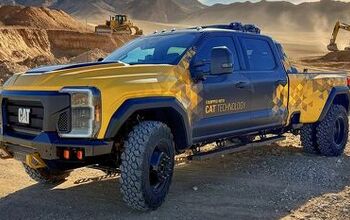
The Insurance Institute for Highway Safety (IIHS) recently announced it is expanding its testing program to include Class 3 vehicles, covering trucks and vans with gross vehicle weight ratings between 10,000 and 14,000 pounds. That means models like the Ford Super Duty and heavy-duty pickups from GM and Ram will soon face a new level of safety scrutiny. But it's not just heavy-duty trucks; the GMC Hummer EV technically falls into Class 3.
Unlike passenger cars and light-duty trucks, heavy-duty pickups haven’t been held to the same federal crash-testing and safety requirements in the U.S. That regulatory gap has allowed some of these larger vehicles to avoid standards that have long applied to smaller vehicles, including certain safety and reporting measures.

The IIHS says the new policy reflects a changing reality, with more buyers using heavy-duty trucks as daily drivers and family vehicles, not just solely as workhorses.
According to IIHS data, 6,535 people were killed in crashes involving medium- and heavy-duty trucks in 2023, accounting for roughly 16% of all road fatalities—that figure has doubled over the past seven years. Injuries are also climbing, with more than 160,000 reported in similar crashes during the same period. Meanwhile, fatality rates involving smaller vehicles have remained relatively stable.

The IIHS won’t be smashing heavy-duty trucks into barriers just yet. The first phase of implementation will focus on low-hanging fruit, such as crashworthiness assessments—essentially an evaluation of whether these vehicles are equipped with key safety features, including airbags and advanced seatbelt systems.
Future phases will expand into crash avoidance technologies, including automatic emergency braking and steering assist systems. The institute also plans to broaden testing to include box trucks and potentially even larger commercial vehicles over time.

AutoGuide's Take
It's about time that some of the largest vehicles on public roads will be subject to more consistent and transparent safety benchmarking. Hopefully, some rejigging of safety standards, paired with the abolishment of fuel economy standards, will start to close the large vehicle loophole that automakers have been exploiting for years.
For the longest time, automakers' largest vehicles haven't been subject to the same safety standards, nor held to the same efficiency standards, acting as a shadow market maker that has effectively guided shoppers into larger and larger vehicles. It's not that consumers prefer larger vehicles per se; it's that automakers simply stopped making almost anything else.
Become an AutoGuide insider. Get the latest from the automotive world first by subscribing to our newsletter here.

An experienced automotive storyteller and accomplished photographer known for engaging and insightful content. Michael also brings a wealth of technical knowledge—he was part of the Ford GT program at Multimatic, oversaw a fleet of Audi TCR race cars, ziptied Lamborghini Super Trofeo cars back together, went over the wall during the Rolex 24, and wrenched in the intense IndyCar paddock.
More by Michael Accardi




Comments
Join the conversation
They make aftermarket wheel liners. Buy them. Also I use rust proof material to help prevent chips in the inner wheel wells help with sound noise also
The rear wheel well liners are minor, as the bed, technically is a bolt on part. The cab, however, the rocker panels rot out, the boxed sections the body mounts sit on rot out, and in many newer trucks with hydroformed "high strength" steel, the frames rot through in as little as 5 years.
Don't even go to the engine and transmission failures across so many makes. L87, Cummins 5th gen cam/lifter failures and their intake heater grid nuts that fall down into the cylinders. Duramax crank breakage. Ford's eco-boom engines. GM 8 speed, and 10 speed. Ford's 10 speed. Chrysler's 68RFE.
I don't see a single one without issues. And most get dismal fuel mileage.