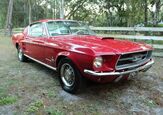


The History of Electric Cars is Littered With Failure and Rebirth

Let’s clear something up right away: the electric car isn’t some modern invention.
The EV’s origin story goes back to a time when streets were clogged with horses, not crossovers—in fact, if you zoom out far enough, today’s crop of electric vehicles looks like a long-delayed sequel.

The First EV Boom—Before Gasoline Took Over
Long before Elon Musk, there was Robert Anderson. In the 1830s, the Scottish inventor built a crude electric carriage powered by non-rechargeable batteries. It was more proof of concept than practical transportation, but it planted a seed.
That seed started to grow once battery technology improved. In 1859, French physicist Gaston Planté developed the first rechargeable lead-acid battery—a breakthrough that still factors in the industry today. By the late 1800s, electric vehicles were viable consumer products.
William Morrison’s electric carriage, introduced in the U.S. in the 1890s, could travel roughly 50 miles and reach speeds of 20 mph. Its debut at the 1893 Chicago World’s Fair created a genuine buzz. By 1900, about one-third of all vehicles on American roads were electric. A century before the modern EV push, electrification was already mainstream.
And it made sense. Gasoline cars were loud, unreliable, and required hand-cranking to start—a dangerous process that could break wrists. Steam cars were complicated and occasionally explosive. Electric cars, by comparison, were quiet, clean, and easy to operate. They were also, notably, popular with women—no crank handle required. Even Clara Ford, wife of Henry Ford, reportedly preferred driving a Detroit Electric.

How Gasoline Won the Next Round
If electric cars were so good, why did they disappear? The answer is simple: cost, convenience, and timing. Factors still working against modern EVs.
When Ford introduced the Model T in 1908, it cost $850—already cheaper than most electrics. By 1912, that price dropped to $590. By 1923, it was down to just $290. Adjusted for inflation, that’s roughly $5,700 in today’s money.
At the same time, electric cars remained expensive—often priced around $1,750 in the early 1910s.
Then came a game-changing innovation: the electric starter. Introduced by Charles Kettering in 1912, it eliminated the need for hand-cranking gasoline engines. Overnight, one of the biggest drawbacks of internal combustion disappeared.
Add in the rapid expansion of gas stations and the discovery of cheap oil, and the equation flipped. Gas cars became affordable, practical, and easy to refuel. Electric cars, with limited range and higher costs, simply couldn’t compete.
By the 1920s, they were effectively gone.

The EV Refuses to Die
But the electric car never really disappeared—it just went quiet. Every few decades, it resurfaced.
In the 1960s, as muscle cars dominated American roads, automakers quietly experimented with electric concepts. General Electric’s Delta prototype could manage about 40 miles of range and hit 55 mph. Ford and GM explored similar ideas—like Chevy's experiments with electric Corvairs and Camaros in the '60s—but none were production-ready.
But for the first time, environmental concerns were beginning to creep in. California’s air quality crisis led to the creation of the California Air Resources Board (CARB) in 1967, an agency that would later play a major role in pushing EV development. Then came the oil crisis of the 1970s. Suddenly, America’s dependence on gasoline looked like a liability. Interest in alternatives surged again.
One of the more memorable results was the CitiCar, a wedge-shaped electric vehicle that looked like it belonged on a golf course. It had a top speed of around 40 mph and about 40 miles of range. Between 1974 and 1982, nearly 4,500 units were sold—making it the most successful American EV since World War II.
Still, it wasn’t enough to change the industry.

The First Modern Electric Car
The real turning point came in the 1990s.
In 1996, General Motors launched the EV1—a purpose-built electric car that was genuinely modern. It was sleek, aerodynamic, and quick, hitting 50 mph in about seven seconds. Range hovered around 80 miles, which was respectable for the time. But there was a catch: you couldn’t buy one.
GM only offered the EV1 as a lease, largely in response to California’s zero-emissions mandate. Around 800 units were produced. Then, in one of the most controversial decisions in automotive history, GM canceled the program, recalled the cars, and crushed most of them.
Ironically, the end of the EV1 helped spark the next chapter.

The Modern EV Era
In the early 2000s, a small California company called AC Propulsion built an electric sports car called the tZero. It was quick—0–60 mph in about 4.5 seconds—and used early lithium-ion battery technology.
When AC Propulsion declined to mass-produce it, two entrepreneurs—Martin Eberhard and Marc Tarpenning—decided to do it themselves. They founded Tesla in 2003.
A few years later, Elon Musk joined the company. In 2008, Tesla launched the Roadster, the first production EV capable of more than 200 miles of range. That was the moment the industry started paying attention again.
From there, things moved quickly.
Nissan introduced the Leaf in 2011, the first widely available mass-market EV. Tesla followed up with the Model S in 2012, proving that electric cars could outperform gasoline rivals while offering real-world usability.
The barriers that killed EVs a century earlier—range, cost, infrastructure—began to fall. Charging networks expanded. Battery technology has improved. Prices, while still high, started trending downward.
Today, there are more than 10 million electric vehicles on the road globally. In the U.S., buyers can choose from over a dozen EVs priced under $40,000—still not cheap, but no longer out of reach for mainstream consumers.

Same Story, Different Ending?
And yet, the story feels familiar.
Electric cars once played a significant role in the early automotive market, and then vanished. They returned in bursts, only to fade again. Each time, the same challenges surfaced: cost, convenience, and infrastructure.
Governments are pushing electrification. Automakers are investing billions. Consumers, slowly but surely, are coming around, and yet EVs represent just 10% of the new car market in North America. Globally, that figure is more like 20%.
The electric car isn’t a new idea. It’s a very old one, finally getting another shot—with better batteries, better timing, and a world that might finally be ready for it. Is this the final chapter when EVs finally achieve mass scale, or just another boom in the electric car's long history of peaks and valleys?
Become an AutoGuide insider. Get the latest from the automotive world first by subscribing to our newsletter here.

More by AutoGuide.com Staff






Comments
Join the conversation
The air quality isn’t even close to what it was in the 60’s , that’s a lame comment .As far as killing the environment, you might want to look into the extreme pollution caused by mining the lithium and rare earths.As far as big oil stopping nuclear back in the fifties ( thank God they did as problems definitely would of occurred) today it’s the green weirdos that kill nuclear .Try to keep up people .Quit using worn out environmental dooms day predictions when they never happen .Democracy runs on oil and NS and will for many decades .The earth is fine especially in the US .
https://www.technologyreview.com/2025/05/20/1116327/ai-energy-usage-climate-footprint-big-tech/
From MIT: We did the math on AI’s energy footprint. Here’s the story you haven’t heard.
"By 2028, the researchers estimate, the power going to AI-specific purposes will rise to between 165 and 326 terawatt-hours per year. That’s more than all electricity currently used by US data centers for all purposes; it’s enough to power 22% of US households each year. That could generate the same emissions as driving over 300 billion miles—over 1,600 round trips to the sun from Earth."