

Video Game Throwback: Need For Speed Underground 2

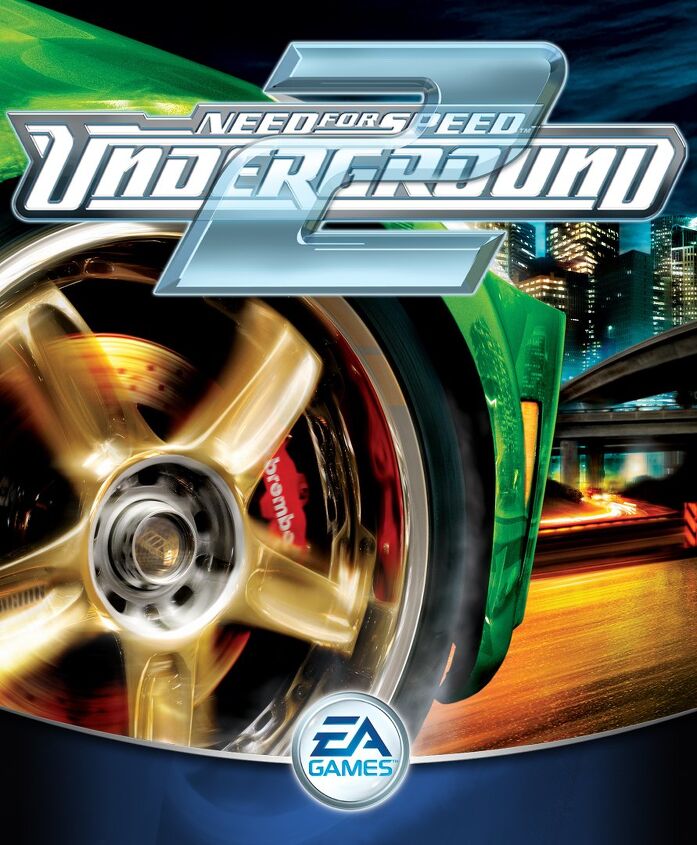
Many sequels do not live up to their predecessors. It’s hard to match the hype. On the odd occasion, some do succeed in adequately continuing a franchise. But rarely does a sequel better the original. Unless of course, that sequel is Need For Speed (NFS) Underground 2.
Released in late 2004, NFS Underground 2 took what made the original Underground game such a success, improved on it in every way, and then added more fantastic content. Electronic Arts (EA) didn’t hold back with this game and was clearly all-in.

Right off the bat, Brooke Burke introduces herself as the star of the game. This was a big deal at the time. We're talking about the same Brooke Burke who had just come off a successful run as host of the E! network show Wild On. She was a household name with the target demographic of this game.
After an adrenaline-filled introduction movie, the title screen came to life with the sounds of Snoop Dogg’s sample/cover/collaboration of Riders on the Storm by The Doors. Although this song may not have the same connection to NFS Underground 2 as Get Low did with the original Underground, it's damn close. And of course, the rest of the soundtrack was filled with banging beats from artists like Rise Against, Queens of the Stone Age, Terror Squad, and Xzibit. Hey, didn’t Xzibit host some show similar to this game…
The Cars Are All There


The pool of cars, of course, included all the usual who’s who of the tuner world like the Toyota Supra, Acura RSX, Mazda RX-7, Mitsubishi Evo, and Subaru WRX. But to expand the game’s audience, and cash in on the growing tuner culture, other vehicles were now included, like the muscular Ford Mustang GT and Pontiac GTO, as well as some forbidden fruit like the Vauxhall Corsa and Peugeot 206.
The biggest transformation, though, had to be the inclusion of SUVs. Three body-on-frame monsters were available, including the Cadillac Escalade, Hummer H2, and Lincoln Navigator. Thankfully, these behemoths did not perform as well as the cars (as they shouldn’t) and were relegated to SUV-only races.
Open World

Better than the SUVs, though, the biggest improvement to the game was the inclusion of the open world map. No longer were players confined to just grinding out a series of repetitive races; they could explore. The map was laid out well, divided into five neighbourhoods, each of which was unlocked as the game progressed.
Players could select an event, location, or random point on the map, and the built-in GPS gave the fastest route to get there. It helped in not having to learn every corner of the map. But there was no way to jump from location to location, which meant moving around to different events involved a lot of tedious driving. This was especially true of the last neighbourhood located at the top of the map that consisted of a few long, looping canyon roads.
New Game Modes

At least players could pass the time by performing Outruns. This consisted of challenging another modified car spotted driving around the city to an impromptu race. The goal was to get 1,000 metres in front of the opponent to win. Outruns could also be done player vs player in the online mode, which was a nice feature.
A new game mode included regular races on the drift courses that were called Street X. But my favourite addition was the Underground Racing League events, which took place on actual race circuits. To keep with the outlaw persona, the idea was that players were hitting up these tracks for unsanctioned races late at night. To enter these races, players had to sign contracts with sponsors, which added some product placement cash into EA’s pockets and gave players an added sense of realism.
Improved Gameplay

As should be expected, the graphics improved with this sequel, and EA did a good job generating engine noises that accurately represented the various cars in-game. The gameplay and driving were smoother, but not perfect. The frame rate would still get choppy if too many opponents were on screen.
Underground 2 was still a pure arcade racer, but it felt more like control was needed to succeed compared to the original game. Bouncing off the walls nonstop did not ensure success. Being able to actually negotiate a corner was a huge advantage. I distinctly remember the RX-8 being an absolute handling monster in the game, giving me much success.
Racing is Only Half the Fun

But the Underground franchise was not all about racing. Car customization is half the fun. For this sequel, the car modification choices were plentiful. I’d spend hours modifying cars. It was one of my favourite aspects of the game.
It did have a few drawbacks, though. Players had to locate and unlock different customization shops to upgrade a car. There were body shops, performance shops, graphics shops, and car specialty shops (the latter could install custom trunk audio, as if the player had wandered onto the set of Unique Whips). All of this driving around to modify a car became tiresome. At least once items were unlocked, players could customize cars on the home screen to their heart’s content.

And it wasn’t just visual tuning that could be done in Underground 2. There was a very detailed performance tuning mode with dynos, and several performance aspects could be adjusted. In fact, it was more in-depth than some serious racing games at the time.
I’m sure there is so much more I could write about this game. But I’ve already rambled on long enough, and frankly, I’ve hyped myself up so much I just want to go play it now. Catch you in the Underground.
Become an AutoGuide insider. Get the latest from the automotive world first by subscribing to our newsletter here.

A 20+ year industry veteran, Mike rejoins the AutoGuide team as the Managing Editor. He started his career at a young age working at dealerships, car rentals, and used car advertisers. He then found his true passion, automotive writing. After contributing to multiple websites for several years, he spent the next six years working at the head office of an automotive OEM, before returning back to the field he loves. He is a member of the Automobile Journalists Association of Canada (AJAC), and Midwest Automotive Media Association (MAMA). He's the recipient of a feature writing of the year award and multiple video of the year awards.
More by Mike Schlee








Comments
Join the conversation