

Mazda's Big SUV Sales Slide as CX-90, CX-70 Falter

Mazda bet big on big vehicles and that gamble is underperforming, company execs have admitted. As a result, the rear-wheel-drive CX-70 and CX-90 both posted steep declines through the first seven months of the year, prompting a pledge from Mazda's finance chief to reverse the trend.
Sales figures released by Mazda North America show the two-row CX-70 fell 28.1 percent to 7,161 units through July. Similarly, the three-row CX-90 dropped 25 percent to 26,102 deliveries over the same span. Those numbers matter more than usual because the United States alone accounts for more than half the sales of vehicles built on the Large Architecture platform, which Mazda developed primarily for these two North American models before spinning off the narrower CX-60 and CX-80 for other markets.
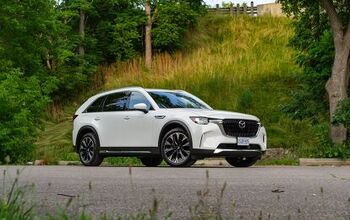

Several external pressures weighed on the pair. Both SUVs are built in Japan, and therefore they remain exposed to import duties. A 27.5-percent tariff initially applied before the Trump administration lowered the rate to 15 percent in September 2025. However, that same month, federal tax credits for plug-in hybrids expired, removing a purchase incentive from the CX-90 PHEV and related variants.
Mazda's chief financial officer, Jeffrey Guyton, did not soften his assessment. Speaking on a call following the company's quarterly financial results, Guyton said, "That situation is not acceptable to us, and we need to grow our large platform business."
In AutoGuide's recent review of the CX-90 PHEV we highlighted a specific issue with that model, with our editor Kyle Patrick commenting that "As the pricing shows, it's likely going to be a hard sell for folks."
To recover, Mazda plans to update both SUVs, though it has not provided specifics or a launch timeframe. So far, the company said only that it is "developing a number of product enhancements" for the CX-70 and CX-90. Whether those changes will extend to the CX-60 and CX-80 remains unclear, though keeping all four models aligned would follow the platform's shared logic.
Unlike most automakers, Mazda generally avoids traditional mid-cycle facelifts, opting instead for incremental tweaks across a model's lifespan. However, whether the planned enhancements represent something more substantial than that pattern has not been disclosed. Guyton indicated the effort will pair product changes with a marketing push, saying Mazda "intends to expand both the awareness and product appeal of large platform vehicles."
The stakes are significant for a company of Mazda's size. The Large Architecture and its inline-six engines carried a heavy development cost, and the CX-70 and CX-90 anchor Mazda's attempt to compete with German rivals in the premium SUV space. As a result, the current sales trajectory means that investment is not yet paying off.
Hopes that the platform would underpin a rear-wheel-drive sedan to challenge the BMW 3 Series remain unrealized, and consequently the SUV slump weakens the case for any such model. A successor to the Mazda6 that is not the Chinese-market electric liftback unavailable in the U.S. does not appear to be on Mazda's agenda.
For now, the path forward rests on the promised enhancements and expanded marketing. Mazda has committed to changing course but has, however, stopped short of detailing what those changes will entail or when buyers can expect to see them in showrooms.

AutoGuide's daily news hound. I report on the latest breaking news in the auto industry across the US and around the world.
More by Marcus Lewinsky


Comments
Join the conversation
Don't know who's doing the thinking for Mazda's future projects but they screwed up witk the changes to the CX5 and original CX9. Will drive our 20 CX9 til something better from them comes along.