


2026 Acura Integra First Drive: Integrated Value

A lot of romanticizing has been done about the first three Acura Integra generations. Specifically, though, it was the hatchbacked two-door versions with manual transmissions and ideally the letters GS-R tacked to the back that made car enthusiasts giddy. The rest of the Integra lineup was certainly cooler and more premium than the average compact car, but they weren’t all enthusiast darlings. They had four-speed automatics and could have letters RS or LS on the back, too. Heck, my mother owned one. And then my aunt.
This is all to say that perhaps enthusiast expectations for the reborn Acura Integra were too high. As underwhelming as it seemed to those of us bespectacled in rose-tinted lenses, the Integra apparently outsells its competitors from Audi, BMW, and Mercedes—combined. Even though its sales aren’t that big, dominance is dominance, and updates for the 2026 Integra make it an even stronger proposition for those who probably don’t care that it comes standard with a CVT.
Quick Take
More standard equipment for the 2026 Acura Integra improves the base trim’s value. Ultimately, though, its primary strengths and weaknesses carry over. It’s more practical and costs less than its German rivals. It also applies a thick layer of polish upon what is effectively a Honda Civic Si. On the other hand, it’s hard to ignore how similar the Integra remains to the Civic, especially at the lower end of the lineup. Upper-trim Civics are nearly as luxurious and feature a superb hybrid powertrain unavailable on the Integra.
2026 Acura Integra: All The Details

What’s New for 2026?
The most obvious change is to the Integra’s grille. Well, sort of, but I’ll dig into that more below. The A-Spec, which is the base Canadian trim, also gets aerodynamic enhancements, black sill garnishes, and new 18-inch wheels. Those are black, too.
The interior gets an updated infotainment system, but it’s hardly groundbreaking and mostly just shows how woeful the Integra’s old base system was. A wireless phone charging pad is now standard, too, and the A-Spec gets some enhanced interior color options.
Mechanical updates? Nope. Moving on.

Exterior Style
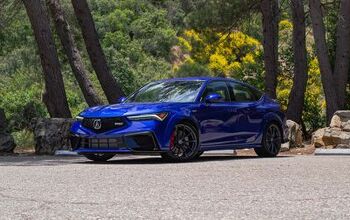
Let’s talk about that grille, shall we? The design is the same, but it can now be body colored. It’s standard with Performance Red and the A-Spec’s exclusive Double Apex Blue, and an optional accessory in black, white, and the new Urban Grey. Want it with the remaining color, silver? Too bad! At the same time, if you’d still like the blacked-out grille with a red or blue car, you can still get that as an accessory. Phew.
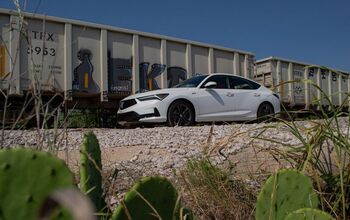
Also new are extremely subtle yet effective enhancements to the A-Spec (or, every Canadian Integra). Little spoilers at the bottom of each front fascia corner are not only aerodynamic enhancements, but are finished in gloss black and pair with similarly trimmed side sill garnishes to create a sportier look. Search for a pic of a 2024 A-Spec. It looks plain by comparison.
In terms of dimensions, absolutely nothing has changed for this compact hatchback.

Powertrain and Fuel Economy
The same could be said for the Integra’s powertrain. It still comes standard with a 1.5-liter turbocharged inline-four that produces 200 horsepower and 192 pound-feet of torque. If that sounds familiar, it could be because it’s the same engine found in the Honda Civic Si.
Unlike that car, however, the Integra not only offers an automatic transmission, but it comes standard with one. It’s a continuously variable transmission (CVT) that simulates gear ratios. I didn’t get a chance to sample that, nor did I do so when the Integra was reborn for 2022.
Instead, I once again sampled the six-speed manual that’s an exclusive, no-cost option for the range-topping Elite A-Spec (or its far worse American name, “A-Spec with Technology Package”). The shifter is similar in concept to the Civic Si’s but the real-metal topper that’ll brand your hand with its shift pattern on extra-hot days is different and little less rounded. The shift action is the same, requiring a bit more muscle to engage each gear than the easy-peasy effort of past Honda gearboxes that could be operated with a thumb or a couple fingers. It feels more appropriate for a performance car while still being just as direct and precise as we’ve come to expect from Acura/Honda.


The clutch’s engagement point is easy enough to figure out, but the throttle response is mushy and numb in the Comfort and Normal drive modes, making it hard at times to smoothly pull away from a stop. Maybe this is tolerable with the CVT, but with the manual, this car needs far sharper throttle response. Engaging Sport mode helps, or alternatively, just the throttle response’s Sport mode in the Individual drive setting (requires Elite/Technology Package), but it still isn’t as crisp as it should be.
Either way, acceleration remains underwhelming. Acura points out that the Integra has a better power-to-weight ratio than the 201-hp Audi A3, but that doesn’t seem to make much of a difference. Having recently driven Audi’s little sedan, the A3 feels substantially quicker, perhaps due to its 44-lb-ft torque advantage. Multiple vehicle-testing publications have clocked the manual Integra A-Spec in the 7-second range (more often in the upper reaches) versus the low 6s for the A3. Of course, the A3 and its fellow tiny German sedans, the Mercedes CLA and BMW 2 Series Gran Coupe, can’t be had with manual transmissions. Then again, they also don’t have CVTs.
Furthermore, the Honda Civic Hybrid is quicker than the Integra, both in terms of perception and testing numbers. While I’m definitely not complaining about offering an engine with a manual transmission (I’ll happily drive a slower car if it means being more engaged with three pedals and a slick shifter), it’s also hard to argue that the Integra wouldn’t be more competitive if it shared the Civic Hybrid’s powertrain.
Handling and Drivability
While every A-Spec gets the sportier looks, you have to pony up for the Elite/Technology Package to get the adaptive dampers that provide three firmness modes of Comfort, Normal and Sport (more on those below). Further added to the no-cost-option manual is a limited-slip differential. Otherwise, all Integra types other than S share suspension tuning, including MacPherson struts up front and an independent multi-link rear. The A-Spec has quicker steering, however.
My drive around the Palos Verdes peninsula in Los Angeles showed the Integra Elite A-Spec (aka “with Technology Package”) to have the general feel of a polished small sport sedan. It’s indeed enjoyable to drive. Its road holding ability and body control were only briefly tested by Palos Verdes’ jumble of populated roads, so I can’t exactly wax poetically or critique them in any detail.
I’m ultimately still curious to see how much of an improvement the Integra represents over the Civic Si, which is not available with the adaptive dampers. I do know that the Civic Si is awfully polished, too. The gap between Civic and Integra has tightened in the last 40 years, and most of that tightening was done by the Civic becoming a more sophisticated, premium machine.

Ride Quality and Comfort
I was unable to tell much of a difference between the adaptive dampers’ three firmness modes. Usually, it’s pretty easy with such systems. Here, they all provided a similarly firm, buttoned-down ride that lets you feel bumps. Comfort mode didn’t make things plush, but Sport didn’t make my head bob, either. Again, I’d be curious to test an Integra with and without these dampers to see how much of a difference they make. As tested, though, the Integra rides more like a sporty compact car than a luxury sport sedan. It’s more VW GTI than Audi A3.
Interior space is substantially better than either of those. Adults and child seats are far more likely to fit in the Integra’s back seat, even with its raked roofline, and the cargo area is better described as a trunk with an enormous lid than a typical, GTI-like hatchback. It can fit far more stuff than either the GTI or A3. That said, I have found that you can actually fit more luggage in the Civic sedan’s trunk, which is relevant as the Civic Si is sedan-only.

Interior Style and Quality
The Integra’s new tech will be addressed in greater depth below, but it also represents the only notable design change for the 2026 Integra. Otherwise, the rest of the cabin still looks like the unused Option B for the Civic’s interior design. Is it sportier, more luxurious or in any way better? I just don’t see it. The switchgear is shared, too, and there’s not a significant materials improvement over top Civics, either.
Now, the Civic is a shockingly lovely compact car that verges on luxury territory in those top trim levels. It’s also not like the Audi A3 represents much of a quality improvement over the VW GTI, but it does look completely different and doesn’t share switchgear. In other words, there’s a gap between them that doesn’t really exist with the Civic and Integra.
On the style front, however, the Integra A-Spec does elevate the cabin to levels unachievable in even the ritziest Sport Touring Civic as well as the Civic Si, which comes only with a red-accented interior and fabric upholstery that looks and feels a bit cheap. The base Integra trim available in the United States is a plain, all-black affair, but the A-Spec makes it less black for 2026 with yellow stitching and offers two unique color options: red with black bolsters and the new-for-2026 Orchid white with blue bolsters. The A-Spec also gains new dashboard trim and ambient lighting for 2026.

Tech and Safety
For 2026, every Integra now gets the same infotainment system featuring a 9-inch touchscreen and a 10.2-inch digital instrument cluster. They also all get wireless Apple CarPlay and Android Auto, plus a wireless charging pad. All of the above used to require the Elite/Technology Package, although that still maintains exclusive access to a standard head-up display and Alexa Built-in.
While this is technically good news, the Integra never should’ve come standard with the old 7-inch touchscreen in the first place. That rudimentary, thinly equipped unit that’s uncompetitive in a Civic had no business being within a football field of a luxury-branded car.
Furthermore, this touchscreen is still just OK. It’s easy to figure out and to use, which is all that most folks are probably looking for (I know I am), but it’s admittedly not cutting edge in appearance, feature content or functionality. Furthermore, it’s not even Honda/Acura’s latest and greatest. Other Acuras, including the mechanically related ADX, are available with Google built-in capability and an upgraded user interface.

Value Dollars and Sense
Prices for the Ohio-built Integra have gone up by $1,200 for 2026. In Canada, the A-Spec now starts at $44,810, with the Elite A-Spec starting at $50,310. Again, the manual transmission is a no-cost option.
Pricing for the U.S.-only base trim starts at $34,595, including destination, which is only $400 higher than before. American pricing for the A-Spec starts at $37,145, which is an increase of $1,050), but the stupidly named “A-Spec with Technology Package” goes up by $400 to $39,195.
Given that the base car now has competitive technology, the Integra’s value proposition has substantially improved for 2026. The Audi A3 starts at $47,400 in Canada and $41,395 in the States, and although it’s a bit better equipped, is a much smaller car. The Mercedes CLA and BMW 2 Series Gran Coupe are even pricier.

Final Thoughts
That value is ultimately what makes the 2026 Integra such an appealing choice. It may not be that different from a range-topping Civic, but that probably says more about how exceptional Honda’s compact sedan and hatchback have become. Nothing was really done to the 2026 Integra that might reignite interest for the enthusiast set, but for everyone else, the base equipment upgrades have definitely increased that appeal.
Become an AutoGuide insider. Get the latest from the automotive world first by subscribing to our newsletter here.
Pros | Cons |
|---|---|
Strong Value | Civic-like Interior |
Available Manual Transmission | Underwhelming Performance |
Big Interior and Trunk | Ho-Hum Tech |

James Riswick has been testing cars and writing about them for more than 20 years. He was the senior editor in charge of reviews for Autoblog and earlier served multiple editor roles at Edmunds.com. He has been interested in cars forever; he actually attended his first auto show when he was 18 months old and has attended at least one every year since. He owns a babied 1998 BMW Z3 in James Bond blue and a 2023 Kia Niro EV.
More by James Riswick




Comments
Join the conversation