


Why Touchscreens Are The Wrong Technology For Cars

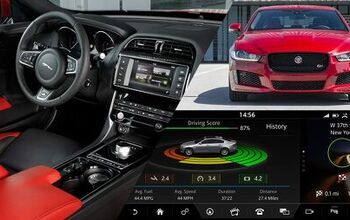
Jony Ive, the designer best known for shaping Apple’s iPhone and iPad, is chirping one of the car industry’s favorite interior trends: the massive touchscreen that controls everything.
Speaking during the reveal of the Ferrari Luce EV’s cabin—which he had a huge hand in chiseling—Ive argued that touchscreens are “the wrong technology to be the primary interface” in vehicles, mostly because they demand attention, attention that should be given to piloting the wheeled projectile instead.

“The reason we developed touch [for the iPhone] was that we were developing an idea to solve a problem. The big idea was to develop a general-purpose interface that could be a calculator, could be a typewriter, could be a camera, rather than having physical buttons." Autocar quoted Ive.
“I never would have used touch in a car [for the main controls]. It is something I would never have dreamed of doing because it requires you to look [away from the road]. So that's just the wrong technology to be the primary interface.”
Touch made sense in the iPhone because it replaced a pile of dedicated hardware buttons with a single “general-purpose interface” that could become whatever the software engine wanted it to be. In a car, that logic breaks down; core functions shouldn’t require you to take your eyes off the road—let alone ancillary features—except with a touchscreen, that's a feature, not a bug.

Thankfully, Ferrari is doing God's work. Rather than turning the dashboard into a wall of glass, the Luce's cab uses a central touchscreen alongside a wider set of physical controls. Ive said the goal was to keep most interactions tactile and intuitive, with each switch designed to feel unique so drivers can identify controls by touch instead of stabbing through menus while trying to keep from rear-ending the Nissan Rogue in front of you.
“We use some touch in the central [screen], but it's very thoughtful, and the vast majority of the interfaces are physical. Every single switch feels different, so you don't need to look.”

Ive also thinks that the auto industry's shift toward ever-larger displays wasn’t driven by end-user usability. “I think what happened was touch was seen almost like fashion. It was the most current technology, so [companies thought] ‘we need a bit of touch’, then the next year ‘we're going to have an even bigger one’, and it will get bigger and bigger.
Our Take:
I don't think we're ever getting this cat back into the bag. Touch will continue to serve a role in motor vehicles, but look for the deployment to start changing as consumers begin to vocally complain, and high-end manufacturers like Ferrari start to look for ways to minimize the prominence. User experience is the name of the game, and the trends all point to the wealthy starting to gravitate to analog experiences in place of the digital simulacra that the rest of us all too willingly accepted.
Become an AutoGuide insider. Get the latest from the automotive world first by subscribing to our newsletter here.

An experienced automotive storyteller and accomplished photographer known for engaging and insightful content. Michael also brings a wealth of technical knowledge—he was part of the Ford GT program at Multimatic, oversaw a fleet of Audi TCR race cars, ziptied Lamborghini Super Trofeo cars back together, went over the wall during the Rolex 24, and wrenched in the intense IndyCar paddock.
More by Michael Accardi




Comments
Join the conversation
This reminds me of that ancient joke from the 90’s about the time Bill Gates and Lee Iaccocca were in sort an industry captains meeting and Bill said “Just imagine what the world would look like if the auto industry has advanced at the same pace as informatics”. To which Lee replied: “Yes, if the auto industry went as the same pace as yours, when you hit the brakes you would get a warning of a screen: ARE YOU SURE YOU WANT TO BRAKE…”
Touch screens are hideous. I am buying older cars going forward until they get back to physical knobs and switches.