

As Gas Prices Rise, So Do Hybrid Vehicle Sales and Pickup Trucks Too

Rising fuel prices are once again reshaping the American car market, but not in quite the way many expected. Instead of triggering a rush toward fully electric vehicles, the recent spike at the pump appears to be driving more buyers toward hybrids.
According to new data from Motor Intelligence and reported by Reuters, U.S. hybrid sales climbed 37 percent in the two months following the outbreak of conflict involving Iran earlier this year. That pace comfortably outstripped the broader auto market, which grew 15 percent over the same period. Electric vehicle sales, meanwhile, rose only 11 percent, despite national average gasoline prices briefly pushing past the $4-per-gallon mark for the first time in four years.
It’s a reminder that, for many American buyers, the hybrid still occupies a sweet spot the EV hasn’t fully managed to claim. People want better fuel economy. They just don’t necessarily want to reorganize their lives around charging stations and kilowatt-hours to get it.

That gap between hybrids and EVs becomes even clearer when compared with Europe. In markets like the United Kingdom and Germany, electric vehicle demand surged alongside fuel prices. British EV sales jumped nearly 80 percent in the same timeframe, while Germany saw battery-electric sales rise 39 percent. Europe’s stricter emissions rules and wider availability of lower-cost EVs have helped normalize electric ownership in ways the U.S. market still struggles with.
In America, hybrids continue to feel familiar. You fill them up like any other car. You don’t need to install a Level 2 charger in your garage or spend time wondering whether the Walmart parking lot charger is working this week. The transition requires almost no behavioral adjustment, and that factors in more than the industry would like to admit.
Search trends back that up. CarGurus says hybrid-related searches represented 14 percent of all vehicle lookups on its platform in April, up from 12 percent the month before. EV searches also increased, though more modestly, climbing from 3.4 percent to 5 percent.
Toyota appears particularly well-positioned for this moment. The company spent years getting criticized for being slow to embrace full EVs while stubbornly doubling down on hybrids. Now, with buyers suddenly rediscovering the value of 40-plus mpg without charging anxiety, Toyota’s strategy looks brilliant. The automaker has already moved the Camry and RAV4 to hybrid-only lineups in several trims, and its electrified vehicle sales in the U.S. rose 34 percent in the months following the start of the conflict.
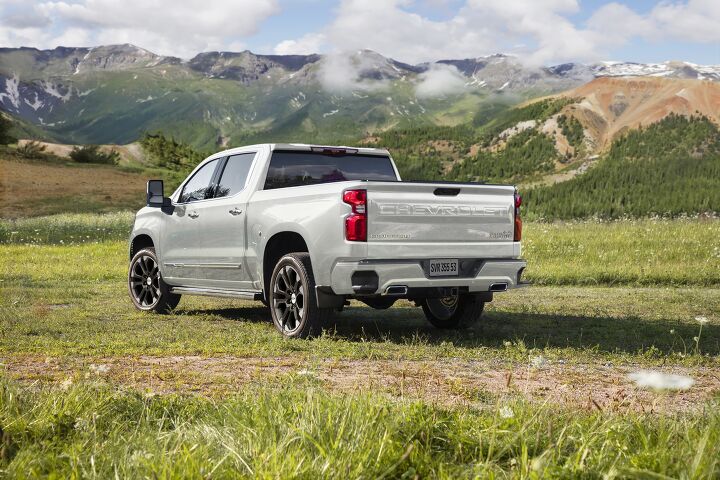
And yet, even with fuel prices climbing, America’s appetite for big trucks hasn’t disappeared. Data from Catalyst IQ shows large pickup sales actually rose 20 percent in March and April compared with February levels before the conflict escalated.
That seems to sum up the American political dichotomy perfectly—gas hits four bucks a gallon, and half the country starts shopping for hybrids while the other half decides maybe now is finally the time for that new crew-cab with 35-inch tires and a tow package they’ll use exactly twice a year.
Become an AutoGuide insider. Get the latest from the automotive world first by subscribing to our newsletter here.

More by Avery Anderson


Comments
Join the conversation
Jeep was smart .
Yep, just bought a 2026 Ram Laramie Crewcab V8 Hemi with $14k off of MSRP.
I would love to know the sales statistics for just California. We are already pushing near $7 a gallon because of our idiotic governor and his taxes.
Unless AI data centers are forced to become energy self-sufficient, power prices will rise and EV energy cost savings will disappear.