

Which Is Best In 2026: Nissan Sentra vs Toyota Corolla vs Honda Civic

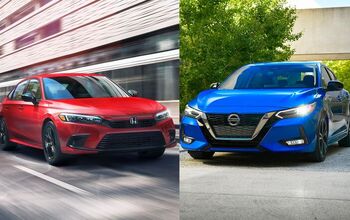
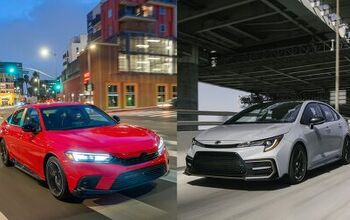
Comparing three of the best compact sedans available right now: the 2026 Nissan Sentra, the 2026 Honda Civic, and the 2026 Toyota Corolla. If you are buying a 2026 Nissan Sentra, 2026 Toyota Corolla, or 2026 Honda Civic, make sure to watch this comparison.
The AutoGuide Creators Series tells stories and amplifies creators from the car world, including family life, car buying advice, commuting tips and car culture.
If you are shopping for a new compact car at around the $30,000 mark, three names will almost certainly end up on your list: the Nissan Sentra, Honda Civic, and Toyota Corolla. They are among the most popular affordable cars on the market, and now that Nissan has redesigned the Sentra for 2026, it is the right time to see how it stacks up against its two biggest rivals.
This comparison looks at the things that matter most: powertrains, reliability, comfort, interior quality, safety, pricing, and overall value. And while all three are good cars in their own way, one of them clearly makes the strongest case.
Powertrains
One thing all three of these compact cars have in common is that their standard gasoline engines are very similar on paper. Each comes with a naturally aspirated 2.0-liter four-cylinder engine, front-wheel drive, and a continuously variable transmission.
The Sentra and Civic make around 150 horsepower, while the Corolla produces roughly 170 horsepower. In real-world driving, though, they feel more alike than different. None of them is especially quick, but all three are smooth enough, quiet enough, and perfectly adequate for normal day-to-day commuting.
Fuel economy is also strong across the board. All three are rated in roughly the 30 to 40 mpg range, or about 6 to 9 L/100 km depending on trim and driving conditions. If your goal is simply to keep fuel costs low, any of them will do the job.
Where the Civic and Corolla begin to pull away is in their hybrid offerings. Both are available as hybrids, while the Sentra is not. That matters, because the Corolla Hybrid and Civic Hybrid can both deliver more than 50 mpg, or roughly 4.5 L/100 km, without costing dramatically more than the standard gasoline versions.
That gives both Toyota and Honda a major advantage. If you want the best possible fuel economy and the lowest long-term fuel costs, the Sentra simply cannot compete.
Reliability and transmissions
This is where the gap widens further.
All three use a CVT, but not all CVTs are equal. In the Corolla and Civic, the transmission is not a major concern. Both Honda and Toyota have proven CVT designs that have built a solid reputation for reliability.
The Sentra, unfortunately, is a different story. Nissan continues to use its Jatco-supplied CVT, which has a long history of premature failures. These transmissions have been a major black mark on Nissan’s reputation for years, and they are one of the main reasons older Nissans suffer such poor resale value.
If one fails, the repair can be brutal. Rebuilding them is often not practical, and sourcing a good used unit is difficult. In many cases, the only real solution is a brand-new transmission from Nissan, which can cost thousands of dollars. It is not unusual to see repair bills climb past $8,000.
To be fair, careful maintenance can help. Frequent fluid changes do improve the odds of long-term survival. And Nissan has certainly made changes over the years. But after more than two decades of CVT-related concerns, it is hard to give the company the benefit of the doubt.
If you plan to keep your next compact car for 10 years or longer and drive it to high mileage, the Civic and Corolla are far safer bets. Both are capable of going well beyond 200,000 miles or 300,000 km with relatively few major issues if properly maintained.
Comfort and driving experience
The good news is that all three are surprisingly pleasant to drive.
For small, affordable cars, the Sentra, Civic, and Corolla all have reasonably comfortable suspension tuning and decent road manners. None feels crude or cheap from behind the wheel.
The Civic stands out as the most polished overall. It has the best balance between ride comfort and handling, which is something Honda consistently does very well. It feels composed, refined, and a little more mature than the others. But the Sentra and Corolla are both perfectly acceptable daily drivers, and most buyers would have no problem living with any of them from a ride-quality standpoint.
Interior design and usability
This is one of the more interesting areas of the comparison because the Sentra makes a strong first impression.
If you like screens, features, and a more modern-looking cabin, the Nissan can be appealing. It offers the most dramatic dashboard presentation of the group, with a large dual-screen layout and upscale-looking design details. It also has one major feature advantage: an excellent available 360-degree camera system, which neither the Civic nor Corolla can match. Nissan’s Zero Gravity seats are also genuinely very comfortable.
But once you look a little closer, the Sentra starts to lose ground.
Its infotainment system is not the most intuitive, and it can be laggy. More importantly, Nissan has gone too far in replacing traditional controls with touch-sensitive panels. That makes basic adjustments more frustrating than they need to be. It looks slick, but it is not as functional.
By contrast, the Corolla and Civic use more straightforward layouts with proper physical controls. They may not feel as flashy, but they are easier to use and better thought out. Both have wireless Apple CarPlay and Android Auto, and both infotainment systems do the job well without trying too hard.
Of the three, the Civic has the best interior overall. It combines solid material quality, excellent fit and finish, smart ergonomics, and the most spacious cabin. Rear-seat room is particularly good, and the overall packaging is excellent. The Sentra is close behind in interior space, while the Corolla is clearly the tightest and most cramped of the three.
Both the Civic and Corolla are also available as hatchbacks, which adds another layer of practicality. The Sentra remains sedan-only.
Safety
All three offer a good amount of standard active safety technology, which is great to see in this segment. But the Civic has the edge here as well.
It is the only one of the three to earn Top Safety Pick status from the IIHS, making it the strongest choice if crash-test performance and safety ratings are high on your priority list.
Pricing
Pricing is fairly close across the board.
The 2026 Nissan Sentra ranges from roughly $24,000 to $30,000 USD, or about $27,000 to $32,000 CAD. The Toyota Corolla sits in a very similar range. The Honda Civic is the priciest of the three, starting around $26,000 USD and climbing to roughly $35,000 USD, or about $30,000 to $42,000 CAD depending on trim.
So while the Civic does cost more, the difference is not dramatic in the context of the segment, especially once you start comparing higher trims and hybrid models.
Verdict
The Nissan Sentra finishes in a clear third place.
That is unfortunate, because Nissan has done a lot right with the redesign. The Sentra looks good, has a modern cabin, offers plenty of technology, and is competitively priced. The seats are excellent, the available camera system is impressive, and the engine itself is reasonably solid.
But beneath the stylish surface, there is just not enough substance to justify choosing it over the Honda or Toyota. The usability issues inside the cabin are disappointing, and the CVT remains a major long-term concern. That alone is enough to hurt both confidence and resale value.
Between the Corolla and Civic, the Corolla is the better choice if your top priority is value. It is simple, efficient, dependable, and inexpensive to own. If you just want a compact car that gets the job done, lasts forever, and costs as little as possible to run, the Corolla remains a terrific option.
But the best all-around compact car here is the Honda Civic.
It is nearly as reliable as the Corolla, just as efficient, and available as an excellent hybrid. On top of that, it offers a more refined driving experience, a higher-quality interior, better safety performance, more passenger space, and a more polished overall design. Yes, it is a bit more expensive, but you are getting more for the money.
Among compact cars, the Civic remains one of the best in the class.
If you were choosing between these three, which one would you buy?
Become an AutoGuide insider. Get the latest from the automotive world first by subscribing to our newsletter here.

Shari Prymak is the host of the Car Help Corner YouTube channel and the Executive Director of Car Help Canada (formally known as the Automobile Consumer Coalition). Car Help Canada is a non-profit organization that supports consumers when dealing with the automobile industry. Mr. Prymak holds Bachelor degrees (BSc and BEd) from the University of Toronto and York University respectively. Prymak’s experience as an automobile consultant has helped thousands of consumers with their automobile purchases and many aspects of automobile ownership. Mr. Prymak has also published a number of research reports on consumer protection and the automobile industry. He also lobbies the government on behalf of consumers and is a member of OMVIC's Consumer Advisory Committee, a delegate authority for the Ontario government. Prymak has hosted programs on consumer protection in the motor vehicle industry on social media, television and radio.




Comments
Join the conversation
Nice comparison, I own 2022 Corolla SE with the manual trans, and my next car will be a three peddle car... even though the Hybrid feels a little like a standard with the engine brake for the regen when braking or slowing up. It would be my first non standard car in 55 yrs.
Can somebody ask Nissan why they are so bent on using the Jatco CVT trans. They must be loosing thousands of sales because of it.