

The 1996 Toyota RAV4 Was an Inauspicious Start to World Domination


The vehicle that popularized the term “cute ute” would become a sales juggernaut.
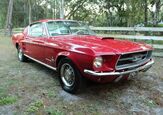
“They don’t make ‘em like that anymore,” while technically true and clearly meant in a positive light, is directed towards an unexpected subject here. I’m snapping a few photos of a 1996 Toyota RAV4 in a parking lot not far from Niagara Falls, and one of the caretakers of the nearby park has wondered over for a gander. Toyota Canada brought this origin of the species along as part of the 2026 RAV4 launch, ostensibly to illustrate 30 years of the nameplate, but also to let journalists experience the evolution firsthand. (In fact, this exact model was previously owned by a journalist colleague.)
Had you told the Pog-slamming, N64-playing Kyle of the time that this, this would be the future of family motoring, he would have shrugged and slid the minivan door shut. Yet even in this well-worn example, there are signs.
Easy to Drive

The three-door RAV4 is almost hilariously tiny by modern standards; it’s comfortably stubbier than any new vehicle on the market, but then the five-door would be too, and it has a solid 16 inches on this tiny (147 inches / 3,740 millimeters) lil’ guy. Yet look at the greenhouse: the driver’s side window is basically a third of the whole vehicle, and there’s a clear sense of where the tail ends with a quick glance over the shoulder. The RAV4’s seating position isn’t high by modern standards, but against a contemporary Tercel or Corolla it represented an easy lateral slide and rewarded with an elevated view out.
Beyond the visibility, the RAV4 is pleasantly simple to drive. Its platform was cobbled together from bits of Carina and Corolla, one of the earlier examples of a car-based crossover. Against the body-on-frame Geo Tracker of the time the RAV4 was smoother, more comfortable—and familiar. Sure, it couldn’t rock-climb like the Geo, but for most buyers that didn’t matter.
Relative Fuel Sipper

Let’s be real: everything drank fuel in the ‘90s. Especially bigger SUVs. The RAV4 was hardly a model of efficiency—it averaged just 21 mpg (11.2 L/100 km) with AWD and the five-speed manual—but it was closer to what car drivers considered normal. Like the driving experience, the RAV4’s fuel efficiency was about minimizing pain points for folks making the switch from car to crossover.
What a stark example of progress driving the ’96 is. This thing makes almost exactly half the power a new AWD RAV4 makes (119 horsepower against 236 hp), and it’s the same story on fuel economy: the ’26 averages between 39 to 44 mpg (6.0 to 5.4 L/100 km). The original doesn’t feel dangerously slow on my brief drive: it just requires plenty of advanced planning. The four-speed auto is surprisingly adept, too.
Growth Spurt

The three-door RAV4 was never long for this world. It disappeared from our shores when the second-generation model launched, but it stuck around in Europe for a few more years. It was the successor, the third-generation model, that truly set the pattern for today’s model. Toyota split the model into two wheelbases: North America got a long 104.7-in (2,660-mm) wheelbase and a total length of 181.9 in (4,620 mm), providing near-Camry levels of interior space. We’re a power-craving bunch too, so the debut of Toyota’s then-new 3.5-liter V6 gave the RAV4 the oomph it needed to satisfy critics. In fact, for a brief window the 270-horsepower crossover was the quickest new Toyota you could buy.

Would a tiny three-door make sense now? Based on the sales splits of the two-door Ford Bronco and Jeep Wrangler, we doubt it. But boy oh boy would we like a special-edition sixth generation model with a fun fabric seat pattern and some retro graphics on the exterior. Because if there’s one thing millennials love, it’s nostalgia.
Become an AutoGuide insider. Get the latest from the automotive world first by subscribing to our newsletter here.
Kyle began his automotive obsession before he even started school, courtesy of a remote control Porsche and various LEGO sets. He later studied advertising and graphic design at Humber College, which led him to writing about cars (both real and digital). He is now a proud member of the Automobile Journalists Association of Canada (AJAC), where he was the Journalist of the Year runner-up for 2021.
More by Kyle Patrick




Comments
Join the conversation