


2025—The Year Of Engines That Blow Up

Engine recalls used to be the sort of thing most people never noticed unless they owned the vehicle in question. In 2025, they’ve become impossible to not notice. An absurd number of major recalls and federal investigations have centered not on software, airbags, or infotainment glitches—although there has been plenty of that—but on the most fundamental component of all: the engine.
Over the past year, more than five million engines sold in the United States have either been recalled or placed under official scrutiny. The brands, layouts, and customers differ, but the mechanical thread running through these failures is largely the same.

To meet fuel economy and emissions targets, modern internal combustion engines operate on razor-thin margins—manufacturers have pushed machining tolerances tighter than at any point in history while pairing those designs with ultra-low-viscosity oils such as 0W-20 and 0W-16.
From an engineering standpoint, thinner oil reduces parasitic losses and improves thermal efficiency. The tradeoff is that there is almost no tolerance left in margin to absorb any inadvertent contamination or variance during manufacturing.
In older engines, small amounts of residual debris from machining—metal shavings, casting sand, or abrasive material—could often be absorbed without immediate failure. When microscopic debris enters oil galleries in a modern engine, it will disrupt hydrodynamic lubrication almost immediately, accelerating wear on crankshaft journals, bearings, and connecting rods. Once that process begins, failure will arrive quickly and fiercely, without much warning.

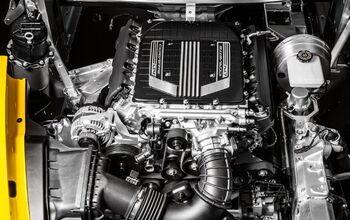
GM’s L87 V8 failures have been linked to bearing wear and crankshaft damage associated with metal debris. Interestingly enough, the L87 used in marine applications—like Nautique and Malibu ski boats—is spec'd with 10W-40 engine oil and hasn't experienced the same failures as in automotive applications.
Toyota’s V6 issues trace back to machining residue that made its way into the crankcase. Honda has cited bearing and rod concerns, while Stellantis acknowledged the presence of sand from the manufacturing process in some engines.
These are not exotic or high-performance powertrains; they are mainstream engines built in large volumes.

Automotive News estimates that across the industry, the combined financial exposure from this year's engine recalls totals in the billions, with long-term warranty costs still to be determined—engine replacements are among the most labor-intensive repairs a dealer can perform, often consuming 15 to 20 hours of shop time per vehicle.
Never mind the incalculable damage to the overall brand—powertrain durability is foundational to brand reputation, particularly for trucks and large SUVs.
None of this suggests that modern engines are poorly built. On paper and on the road, they deliver more power, better efficiency, and lower emissions than their at any other time in history—but corners are being cut in the assembly process in the name of cost or efficiency. Maybe with a more relaxed regulatory environment, automakers will be able to bake in a bit more tolerance as a safety margin, that or like, go back to using 5W-30 engine oil.
Become an AutoGuide insider. Get the latest from the automotive world first by subscribing to our newsletter here.

An experienced automotive storyteller and accomplished photographer known for engaging and insightful content. Michael also brings a wealth of technical knowledge—he was part of the Ford GT program at Multimatic, oversaw a fleet of Audi TCR race cars, ziptied Lamborghini Super Trofeo cars back together, went over the wall during the Rolex 24, and wrenched in the intense IndyCar paddock.
More by Michael Accardi





Comments
Join the conversation
Better Idea, don't buy new vehicles until they sort out their problems.
I totally agree, I've got a 2001 GMC 2500HD w/an 8.1 and a matching Allison tranny w/ the HD 3.73 rear end. Paid $37,000 for her and haven't had any real problems with her. My taranny, allows me to set the tire size, top end speed, as well as shift speed. Best money ever spent. Throughtout the years, been montioring the market and have noticed the increase of recalls. Will keep my old girl, something I know is reliable!!