

Ranking Every Small SUV Worst to Best For Reliability

The subcompact SUV segment is one of the most competitive in today’s market, but not all models are created equal when it comes to long-term dependability. We’ve taken a closer look at the latest offerings to rank today’s small SUVs from worst to best for reliability.
From popular choices like the 2026 Toyota Corolla Cross, Honda HR-V, Mazda CX-30, and Subaru Crosstrek to rivals such as the Nissan Kicks, Hyundai Kona, Kia Seltos, Chevrolet Trax, Hyundai Venue, Volkswagen Taos, and Jeep Compass, this comparison aims to highlight which models are most likely to stand the test of time.
If you’re shopping in this segment, reliability can make all the difference—not just in ownership costs, but in overall peace of mind. So which subcompact SUV comes out on top? Let’s break it down.
The AutoGuide Creators Series tells stories and amplifies creators from the car world, including family life, car buying advice, commuting tips and car culture.
What are the most reliable small SUVs on the market today? To answer that, let’s rank today’s subcompact crossover SUVs from mainstream, non-luxury brands on a reliability tier list, from F at the bottom to S at the top.
F Tier
Jeep Compass
At the very bottom sits the Jeep Compass, which is easily one of the lowest-quality small SUVs on sale today. Even though Jeep has been building the Compass for years, it continues to suffer from a long list of problems, including electrical issues, engine and transmission trouble, and generally poor build quality.
The Compass used to be at least somewhat defensible as a cheaper option. But now that it commonly lands in the $35,000 to $45,000 range, there is very little reason to consider it. It doesn’t offer the durability or quality you would expect at that price, and if long-term dependability matters, this is one to avoid.
D Tier
Volkswagen Taos
Next up is the Volkswagen Taos, which lands in D tier. The Taos is another low-quality entry in this segment and arguably one of the weakest vehicles in Volkswagen’s lineup.
Its 1.5-liter turbocharged engine has shown itself to be troublesome, with some reports of serious failures. Early versions were saddled with a jerky dual-clutch automatic that often felt as though it was coming apart. Volkswagen has since replaced that transmission with a conventional eight-speed automatic, which is an improvement, but not enough to transform the Taos into a safe long-term bet.
Electrical issues remain common, servicing can be frustrating and expensive, and overall quality is still underwhelming. It is best skipped.
Hyundai Kona and Kia Seltos
The Hyundai Kona and Kia Seltos also land in D tier. These two are mechanically similar enough to evaluate together, and their main weakness is the standard 2.0-liter four-cylinder engine.
This engine is a holdover from Hyundai and Kia’s more troublesome years and has a history of oil consumption, bearing failure, and piston-ring problems. The Seltos, in particular, has been recalled multiple times over engine-related concerns.
If you are set on buying one of these, the optional 1.6-liter turbo engine appears to be the safer choice. The Kona also seems to fare somewhat better overall than the Seltos. Even so, both remain riskier bets than the best options in this class.
C Tier
Chevrolet Trax and Trailblazer
The Chevrolet Trax and Chevrolet Trailblazer fall into C tier. These two share the same basic powertrain, which consists of a tiny 1.2-liter turbocharged three-cylinder engine paired with a timing belt.
That is not an encouraging formula for long-term durability. Failures may not be rampant, but a heavily stressed turbocharged three-cylinder simply is not the kind of engine you choose if your goal is to keep a vehicle for 10 years or more without major headaches. It feels more like a powertrain designed to survive the warranty period than one built for longevity.
Nissan Kicks
The Nissan Kicks also lands in C tier. The good news is that its four-cylinder engine is generally reliable. The bad news is that it uses Nissan’s long-troubled Jatco CVT, which remains the vehicle’s Achilles’ heel.
These transmissions are known to be fragile and can fail well before six-figure mileage. When they do, replacement costs can be steep, often reaching $8,000 or more, which can effectively total an older Kicks. Regular fluid changes can help, but the underlying risk is still there. Unless you are leasing one, it is difficult to recommend.
B Tier
Hyundai Venue
The Hyundai Venue is one of the first genuinely decent entries on the list. It barely qualifies as a crossover and is front-wheel drive only, but it has proven to be a fairly reliable small and affordable vehicle.
It uses Hyundai’s newer 1.6-liter naturally aspirated Smartstream four-cylinder, which is much improved over some of the company’s older engines. The CVT has also held up reasonably well so far. It may not be the strongest or most refined option in the segment, but for the money, it is a respectable and largely trouble-free choice.
Mitsubishi Outlander Sport / RVR
The Mitsubishi Outlander Sport, known as the RVR in some markets, also earns a B. Mitsubishi has been building this model in roughly the same form for well over a decade, and that familiarity has worked in its favor.
Its naturally aspirated four-cylinder engine and CVT combination is simple and has proven to be largely drama-free. It is not the most modern or sophisticated SUV in the class, but as a basic commuter crossover, it can be surprisingly dependable.
A Tier
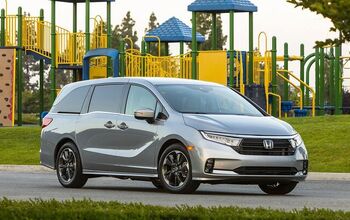
Honda HR-V
The Honda HR-V lands comfortably in A tier. It is one of the most reliable vehicles Honda currently makes, which is saying something.
The HR-V uses a naturally aspirated 2.0-liter four-cylinder with no turbocharger, no direct injection, no cylinder deactivation, and none of the more complicated fuel-saving tricks that often create long-term problems. It is a simple, proven engine that should last a very long time with routine maintenance.
Yes, it still uses a CVT, and that remains the main weakness of the package. But Honda’s CVTs have become much more dependable than Nissan’s, and overall the HR-V is a very safe buy.
Subaru Crosstrek
The Subaru Crosstrek also earns an A tier rating. Like the HR-V, it is a well-built, durable small SUV with a strong reputation for long-term dependability.
Its 2.5-liter naturally aspirated boxer engine has been around for years and is well sorted by now. Subaru’s CVT, while not ideal in theory, has also proven to be fairly robust in practice. Taken together, the Crosstrek is one of the easiest vehicles in this segment to recommend.
Both the HR-V and Crosstrek come very close to S tier, but they are held back just slightly by their CVTs.
S Tier
Mazda CX-30
The Mazda CX-30 earns a place in S tier because it gets one major thing right that so many rivals do not: it uses a proper six-speed automatic transmission.
That alone gives it an advantage over many competitors. Mazda’s six-speed automatic is well proven and durable, and the engine paired with it, a naturally aspirated 2.5-liter four-cylinder, has been in production for roughly 15 years. This is an exceptionally solid powertrain by modern standards.
If your top priority is long-term reliability and low mechanical drama, the CX-30 is one of the safest bets in the entire segment.
Toyota Corolla Cross Hybrid
The other SUV that belongs in S tier is the Toyota Corolla Cross Hybrid.
The regular gas-only Corolla Cross is perfectly fine and would likely slot into A tier. But the hybrid is the standout. It uses Toyota’s fifth-generation hybrid system, pairing a simple naturally aspirated 2.0-liter four-cylinder with electric motors and Toyota’s proven planetary-gear eCVT.
This setup is about as close to bulletproof as modern powertrains get. Toyota has been refining this basic hybrid architecture for more than two decades, and it has one of the strongest durability records in the industry. High-mileage ownership should be easy, and reaching 250,000 miles or more is not unrealistic.
That is why Toyota uses versions of this same hybrid system across so much of its lineup, from the Prius to the Corolla to several SUVs. It works, and it lasts.
Final Verdict
If reliability is your top concern, the safest choices in the subcompact SUV class are the Mazda CX-30 and the Toyota Corolla Cross Hybrid. Just behind them are the Honda HR-V and Subaru Crosstrek, both of which are also excellent long-term buys.
At the other end of the spectrum, the Jeep Compass, Volkswagen Taos, and some of the more problematic Hyundai, Kia, Nissan, and GM entries are much harder to recommend if you plan to keep your SUV beyond the warranty period.
If you want more reliability tier lists for other vehicle categories, say the word.
Become an AutoGuide insider. Get the latest from the automotive world first by subscribing to our newsletter here.

Shari Prymak is the host of the Car Help Corner YouTube channel and the Executive Director of Car Help Canada (formally known as the Automobile Consumer Coalition). Car Help Canada is a non-profit organization that supports consumers when dealing with the automobile industry. Mr. Prymak holds Bachelor degrees (BSc and BEd) from the University of Toronto and York University respectively. Prymak’s experience as an automobile consultant has helped thousands of consumers with their automobile purchases and many aspects of automobile ownership. Mr. Prymak has also published a number of research reports on consumer protection and the automobile industry. He also lobbies the government on behalf of consumers and is a member of OMVIC's Consumer Advisory Committee, a delegate authority for the Ontario government. Prymak has hosted programs on consumer protection in the motor vehicle industry on social media, television and radio.






Comments
Join the conversation
Choosing Mitsubishi over the GM twins is ridiculous. Mitsubishi is one of the worst automakers with poor reliability.
didnt mention Toyota?