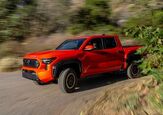


Toyota Has A Problem That They Either Can't Or Won't Fix

Toyota has a major problem that they are not fixing.
Why does Toyota have a car shortage? What is Toyota doing about the car shortage and wait times, and why are Toyota wait times so long?
Watch the video below to get the answers.
What Is Happening with Toyota? Inventory Shortages, Dealer Markups, and Quality Slip-Ups
Toyota remains the gold standard for long-term automotive value, low maintenance costs, and class-leading resale retention. Yet, the automaker is facing three escalating challenges that are testing buyer patience and eroding its long-held advantage.
From multi-month factory waitlists and aggressive dealership markups to uncharacteristic mechanical failures on key models, here is a breakdown of the issues currently impacting Toyota buyers.
1. Persistent Inventory Shortages and Lost Market Share
While post-pandemic supply chain bottlenecks largely resolved across the automotive industry by 2025, Toyota dealerships continue to suffer from severe lot shortages. In the United States, wait times stretch from weeks to several months; in Canada, backlogs for popular models frequently approach a full year.
- The 2026 RAV4 Transition: Completely redesigned for 2026, the RAV4 dropped its conventional gas-only engine to become an exclusively hybrid and plug-in hybrid lineup. Factory retooling slowed output right as demand peaked, creating massive waitlists.
- Losing Ground to Honda: Frustrated shoppers unwilling to wait months for a RAV4 have walked across the street to competitors. In the first half of 2026, Honda sold 226,000 CR-Vs in the US compared to 154,000 RAV4s—a gap of more than 72,000 units, allowing the CR-V to overtake the RAV4 in sales for the first time in a decade.
- Lineup-Wide Bottlenecks: Beyond the RAV4, severe wait times persist across high-demand models including the Corolla, Corolla Cross, Camry, Highlander, Grand Highlander, and Sienna.
Despite widespread consumer speculation that Toyota intentionally restricts supply to avoid offering incentives, company executives maintain that assembly plants are running at absolute maximum capacity. High living costs have pushed budget-conscious buyers toward Toyota for its unmatched fuel economy and resale value, creating demand that outpaces manufacturing output.
2. Aggressive Dealership Price Gouging
Chronic low inventory has created an environment where many Toyota dealerships routinely take advantage of desperate buyers. Because demand far exceeds supply, questionable sales tactics have become widespread:
- Market Adjustment Markups: Dealers adding thousands of dollars directly above MSRP with no added value.
- Mandatory Add-On Packages: Forcing buyers to pay for high-margin extras like VIN etching, paint sealants, electronic rust modules, and extended warranties as a condition of purchase.
- Financing Restrictions: Refusing cash buyers or outside financing, requiring customers to finance or lease strictly through the dealership.
- Delivery-Day Surprises: Customers who wait months for a factory order are frequently told upon arrival that they must purchase thousands of dollars in add-ons to take delivery.
Buyer Tip: Not every dealership engages in these practices. Shopping outside major metro areas or working with reputable automotive brokers can help buyers locate transparent dealers willing to sell at or slightly below MSRP without mandatory junk fees.
3. Uncharacteristic Build Quality and Reliability Issues
Perhaps the most concerning trend is a noticeable slip in mechanical reliability across several major Toyota nameplates—models from a brand whose reputation was built on bulletproof engineering:
- Toyota Tundra (3.4L Twin-Turbo V6): Following the retirement of the legendary 5.7L V8, the redesigned Tundra’s twin-turbo V6 has suffered widespread main-bearing failures caused by leftover manufacturing debris, prompting massive recalls and full engine replacements.
- Toyota bZ / bZ4X (12-Volt Battery Drain): Shared with the Subaru Solterra, Toyota's all-electric crossover continues to experience parasitic 12-volt battery drain issues into the 2026 model year, leaving owners stranded and prompting class-action litigation.
- Toyota Highlander (8-Speed Automatic): Gas-powered Highlanders equipped with the 8-speed automatic transmission have drawn numerous complaints and lawsuits over harsh shifting, low-speed hesitation, and transmission whining.
Why Toyota Is Slow to React
Toyota operates like a massive, conservative cruise ship—exceptionally stable, but slow to pivot when market conditions or engineering flaws demand rapid action.
Because overall demand remains sky-high and consumers continue to accept long waitlists and dealer markups, there has been little immediate financial pressure on Toyota to fast-track new assembly plants, rein in predatory dealers, or deploy rapid mechanical fixes. However, seeing the Honda CR-V outsell the RAV4 serves as a clear warning that consumer patience has a limit.
Become an AutoGuide insider. Get the latest from the automotive world first by subscribing to our newsletterhere.

Shari Prymak is the host of the Car Help Corner YouTube channel and the Executive Director of Car Help Canada (formally known as the Automobile Consumer Coalition). Car Help Canada is a non-profit organization that supports consumers when dealing with the automobile industry. Mr. Prymak holds Bachelor degrees (BSc and BEd) from the University of Toronto and York University respectively. Prymak’s experience as an automobile consultant has helped thousands of consumers with their automobile purchases and many aspects of automobile ownership. Mr. Prymak has also published a number of research reports on consumer protection and the automobile industry. He also lobbies the government on behalf of consumers and is a member of OMVIC's Consumer Advisory Committee, a delegate authority for the Ontario government. Prymak has hosted programs on consumer protection in the motor vehicle industry on social media, television and radio.


Comments
Join the conversation