
2026 Subaru Outback Wilderness Review: First Drive


Healdsburg, California – The redesign of Subaru’s Outback has brought about controversy. Many lament the demise of the lifted wagon look, while others appreciate the boxier, more SUV-like shape. Love it or hate it, the newest-generation Outback may be best suited for the latest member joining Subaru’s mid-size SUV family: the Wilderness.
Launched just four years ago, Wilderness has quickly grown into Subaru’s sub-brand of rugged off-road ready SUVs. First debuting on the Outback, followed quickly by the Forester and Crosstrek, these jacked-up SUVs have found a loyal customer base who want a bit more capability in their sensible Subarus.
Now, it’s time for the second-generation Wilderness models to come to fruition and just like the original, the Outback is first up. To see whether the 2026 Outback Wilderness has learned some new tricks, or is just the same formula on repeat, Subaru brought us to the rolling hills of Northern California to put it through its paces.
2026 Subaru Outback Wilderness: All the Details

Quick Take
Subaru’s Wilderness sub-brand has been quite successful in its few short years of existence. This year a redesigned Wilderness model debuts based on the boxier 2026 Outback.
Building on what’s made these rugged off-road ready SUVs so popular, the 2026 Subaru Outback Wilderness does not stray far from the formula. Some new niceties have been added like electronically controlled dampers, as well as useful exterior touches. But at its core, the new Outback Wilderness drives a lot like the vehicle it replaces which isn’t a bad thing at all.
What’s New for 2026: The Outback

The Subaru Outback is all-new this year and, as mentioned earlier, radically different than any generation before it. The blockier styling, new interior, and upgraded technology highlight the changes this year while the mechanics are vastly the same. Of course, with a new generation Outback, there is a new generation Wilderness model.
Exterior Style: Blockier with Truck Inspiration

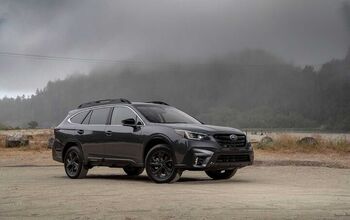
The Wilderness version is the same length and width as other Outback models but does have a 0.8-inches (20 mm) taller roofline. The heavily plastic front bumper has two stylized integrated push bars, and SUBARU is stamped in large capital letters across the grille. It has a definite pickup truck feel to it. Matte black side mirrors, side cladding, headlamps, wheel arches, and hood decal are all standard.
The raised roof rails are reenforced, capable of holding an 800-pound (363 kg) static load (220 pounds [100 kg] dynamic). The roof rails feature the usual anodized copper-finish accents, which are also found around the reverse lights and fog lights. While on the topic of fog lights, the Wilderness has unique hexagonal style units.

At the back, there are two rectangular pads on either side of the rear logo that are made of a hard plastic material. These pads are intended for leaning gear up against them, like skis, paddles, bikes, etc. The plastic used here, much like the bumpers, grille, and wheel arches, is textured, but not the nicest looking. That’s part of the charm though, as it’s meant to get abused off-road and when it gets scratch, scuffed, or dinged, it won’t hurt as much since it wasn’t all that pretty to begin with.
Powertrain and Fuel Economy: Much the Same

The Outback Wilderness continues to be powered by a singular drivetrain option. Under the hood is the torquey 2.4-liter turbocharged flat-four-cylinder that makes 260 hp and 277 lb-ft of torque. At max boost, its pushing 15.3-PSI, and features minimal turbo-lag. It’s one of those rare engines that feels punchier than the numbers would suggest. Acceleration feels stronger than just 260 hp motivating 3,973 pounds (1,815 kg). If someone were to tell us it made closer to 290 horsepower, we’d probably not overly question it.
Part of the instant, smooth power delivery comes from the throttle mapping and continuously variable automatic transmission. The latter does its best to simulate occasional gear shifts for a natural driving feel and if that’s not enough, there is a virtual 8-speed manual mode using the paddle shifters.
Requiring regular grade fuel, the Wilderness suffers a bit of a fuel economy penalty due to its higher resistant tires and raised ride height. In the city, it achieves the same 21 mpg (11.3 L/100 km) average as other turbocharged Outback models, but on the highway is loses 2 mpg, officially rated at 27 mpg (8.8 L/100 km).
Handling and Drivability: Still Capable

The 2026 Subaru Outback Wilderness uses a four-wheel independent suspension that is once again raised to 9.5-inches (240 mm), up from the Outback’s standard 8.7-inches (220 mm) ground clearance. This alters the vehicle’s off-road prowess, with the approach angle extended to 20 degrees compared to 18 degrees; the ramp breakover angle up to 21.2 degrees compared to 19.4 degrees; and the departure angle increasing to 22.5 degrees compared to 21.4 degrees.
There are now electronically controlled dampers that feature an off-road tune according to Subaru. What that means is the electronic damper is focused more on keeping body motions in check on rough roads rather than keeping it flat under hard cornering. The dampers programming is also linked to the dual X-Mode, since passengers can get tossed around more on slow-speed, rough surfaces.

Other off-road ready goodies include re-enforced underbody protection, consisting of an aluminum skid plate for engine and front end, as well as a steel plate for the rear differential. The SUV comes with small 17-inch wheels with the chunkiest tires available on a 2026 Outback, measuring 225/60R17 in size. These all-terrain Bridgestone Dueller tires aren’t overly aggressive in terms of tread pattern but are blockier than other Outback tires and offer a good blend between on-road performance and off-road ability.
The Wilderness gets a tighter steering rack with a turning ratio of 13.0:1 instead of 13.5:1. Combined with a slightly narrower front and rear track, and the Wilderness has a tighter turning circle which helps in narrow off-road situations.

Even if the 2026 Subaru Outback Wilderness is not a rock crawling beast ready to go toe-to-toe with A Ford Bronco Raptor and Jeep Wrangler Rubicon, it’s easily the best off-road car. What we mean by that is the Outback, despite its new clothes, still drives like a car, just how it always has. It makes sense since the underpinnings of the new Outback and very similar to those of the previous generation. Nowhere else can someone get 9.5-inches (240 mm) of ground clearance, sure-footed off-road traction, yet car-like driving behaviours. It’s a best of both worlds situation for those that need a single vehicle for in-city errands as well as weekend jaunts down long, twisting, beat-up dirt roads.
Competitors
- Ford Bronco Sport Badlands
- Honda Passport Trailsport
- Jeep Cherokee
Ride Quality and Comfort: Better Ride in the Rough Stuff

The electronically controlled dampers do a great job off-road. Washboard roads, deep ruts, or other unpleasant crevasses that should crash through the chassis seem to get muted by half. For a vehicle lacking an air suspension, the impact absorption is quite good.
On paved roads, there is a bit more road noise and tire vibration which should be expected from the all-terrain tires. Inside, there is ample room for adults in either the front or rear seats. Up front, the Wilderness come standard with a power driver’s seat, but a manually adjustable passenger seat. It’s the only Outback trim that comes like this. Other Outback trims have either two power front seats or two manual seats: there’s no split.

The front seats are also heated and usually finished in a StarTex material. Our tester had the upgraded Nappa Leather front seats which adds power adjustability to the passenger seat and ventilation to both front seats.
With the new squared off rear portion of the Outback, the cargo capacity is quite generous, listed at 34.6 cubic feet (980 L). Fold the rear seats down and capacity expands to 80.5 cu ft (2,280 L). One drawback to the Wilderness version of the Outback is a lack of underfloor storage beneath the cargo floor as this model comes with a full-size spare tire.
Interior Style and Quality: Upgrades Abound, But…

Inside, the Wilderness has unique patterns on plenty of the trim and materials, including the soft touch panel across the dashboard. The Wilderness also gets exclusive yellow accent stitching and unique logos on the headrests and floor mats.
The 2026 Outback features a standard 12.3-inch fully digital, customizable driver information center, as well as a 12.1-inch infotainment system. The latter is now in a more conventional horizontal layout. There are once again hard buttons below the infotainment screen to control the HVAC system, which is a welcome return. We’re less ecstatic about the loss of the tuning knob on the center screen though.
Tech and Safety: Mostly Better

In both Canada and the United States, the 2026 Outback Wilderness sits mid-level within the vehicle’s trim hierarchy. Standard equipment includes a power rear liftgate, USB-A and USB-C ports, a Harmon Kardon audio system, rain sensing wipers, heated rear seats, and a heated steering wheel. Optional features on our tester include a power moonroof, power folding mirrors, navigation, and the ventilated Nappa Leather front seats. In Canada, the power mirrors and Nappa seats are not offered, but the power moonroof and navigation system come standard.
On a safety front, there is Subaru’s full EyeSight suite of safety systems, as well as MySubaru Connected Services. But, the Wilderness does not include any hands-free driving technology.
Value Dollars and Sense: Still Great Value; Especially in Canada

In the United States, the 2026 Subaru Outback Wilderness starts at a price of $46,455 including destination charges. As tested, our loaded up model came in at $50,535, once again including destination charges. That puts it around the same price as a Honda Passport Trailsport and a few thousand dollars below the Trailsport Elite.
In Canada the 2026 Subaru Outback Wilderness only comes one way, at a price of $51,490 including destination charges. This presents even greater value as it undercuts the Honda Passport Trailsport by several thousand dollars and the Trailsport Touring by over $10,000.
Final Thoughts: The Blockier Outback to Get

Regardless of the divisive restyle of the 2026 Subaru Outback, the Wilderness continues to be a unique combination of car-like behaviour and off-road prowess. Although Subaru didn’t reinvent the rugged SUV with the 2026 redesign, the brand improved on an already good formula, with nice additions like the electronically controlled dampers and useful rear gear rests.
Subtle the Wilderness is not, and the new Outback version is more in-your-face than before. But it’s also better and continues to do exactly what we expect from Subaru’s rugged sub-brand.
Become an AutoGuide insider. Get the latest from the automotive world first by subscribing to our newsletter here.
A 20+ year industry veteran, Mike rejoins the AutoGuide team as the Managing Editor. He started his career at a young age working at dealerships, car rentals, and used car advertisers. He then found his true passion, automotive writing. After contributing to multiple websites for several years, he spent the next six years working at the head office of an automotive OEM, before returning back to the field he loves. He is a member of the Automobile Journalists Association of Canada (AJAC), and Midwest Automotive Media Association (MAMA). He's the recipient of a feature writing of the year award and multiple video of the year awards.
More by Mike Schlee





Comments
Join the conversation
Powertrain the same?! - Look for more head gasket failures and Subaru saying "Sorry, you're out of luck"!
I think it looks great. It's chunky and weird. But that's what you expect from a Subaru.