

2026 Subaru Outback Review: First Drive

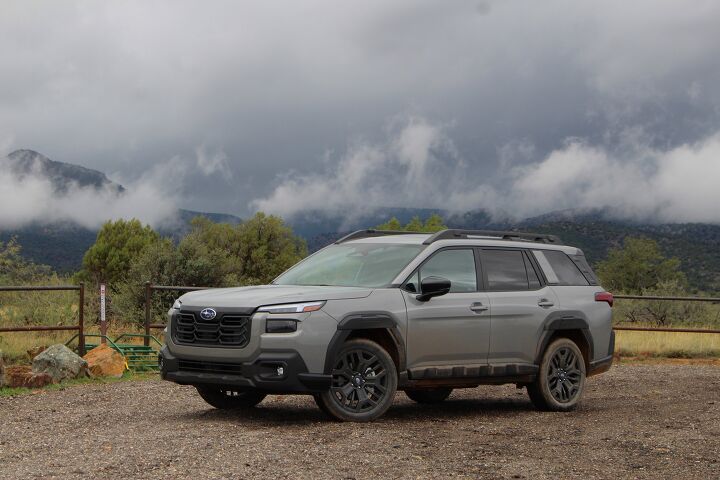
Sedona, AZ – The plan was simple - head to the desert. It would be a warm, dry, great place to test the new, seventh-generation, 2026 Subaru Outback. Mother Nature, however, wasn’t on board.
The morning of our first drive behind the wheel of Subaru's boxier SUV, the skies exploded. Every form of precipitation imaginable encompassed our route, accompanied by blinding lightning storms that created some of the greasiest roads we’ve ever encountered. It was, indeed, the perfect conditions to test the new 2026 Subaru Outback.
2026 Subaru Outback First Drive: All the Details
Quick Take
Much has been made about the new 2026 Subaru Outback ditching the tall-wagon look in favor of a more traditional, boxier SUV body. There are benefits to the new look, specifically when it comes to cargo capacity.
But has it ruined the car-like driving qualities Outback owners relish? No, it hasn’t. Regardless of the vehicle’s new clothes, the bones underneath are essentially the same as the previous generation, just enhanced. It drives smoother and quieter, but still has that Outback feel. Plus, there’s a more modern interior with improved technology.
What’s New for 2026:
The biggest change to the 2026 Subaru Outback is the vehicle’s shape. After 30 years of being a raised-up wagon with body cladding, the mid-size Subie has gone full SUV. What hasn’t changed as much is what’s underneath.
Although the 2026 model signifies a new generation for the Outback, it’s not a dramatically different platform. It’s based on the sixth-generation platform with a lot of updates and enhancements.
The new Outback will be available in Premium, Limited, Touring, Limited XT, Touring XT, and Wilderness trim levels in the United States. In Canada, there’s more demand for turbocharged models, so the lineup is simplified to Touring, Limited XT, Wilderness, and Premier XT.
Exterior Style:

The manufacturer claims the boxier body is in response to customer’s requests for more cargo space and a more rugged look. If you’re sad the wagon-esque body is dead, blame North America and the unrelenting love affair with Sport Utilities.
Measurements for the new vehicle aren’t that far off of the current Outback. The wheelbase is identical at 108.1-inches (2,745 mm), while length has increased slightly to 191.7-inches (4,870 mm). The 2026 Outback isn’t quite as wide at a total of 74.0-inches (1,880 mm), while height has increased a bit to 67.5-inches (1,715 mm).

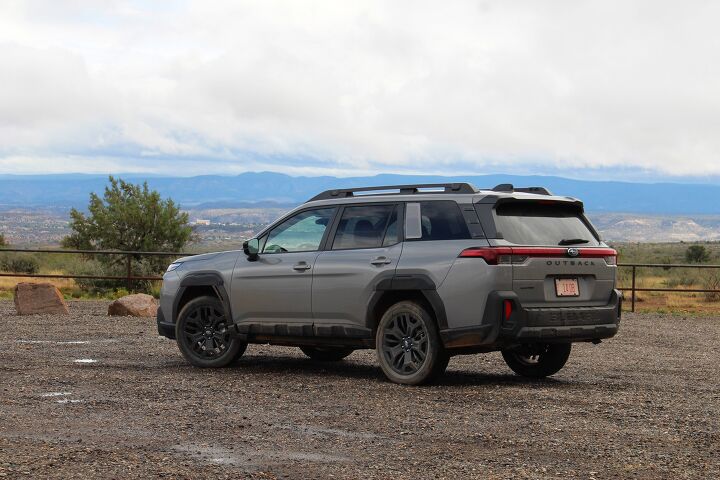
The new front fascia features a more upright grille and reintroduces body-color bits around the headlights. While on that topic, the headlights are now vertically orientated. The boxier side profile has a flatter roofline and a steeper rake on rear glass. The rear lights are narrow and run the width of the Outback.
If still in need of further proof that this is a SUV and not a raised wagon, there are official Subaru-accessory running boards available for the first time on an Outback.
Powertrain and Fuel Economy:

There’s no surprise, or much change, when it comes to what’s under the hood. The 2026 Outback gets the updated 2.5-liter four-cylinder also found in the Forester and Crosstrek. That means the entry-level engine now has a bit less power at 180 hp, but a bit more torque at 178 lb-ft.
We got to sample an XT version of the new SUV which means it gets the upgraded 2.4-liter turbocharged four-cylinder. The specs haven’t change for the new generation model, with the flat-four still pumping out 260 hp and 277 lb-ft of torque on regular grade fuel. Those numbers though, as always, are a bit deceiving. The Outback continues to feel more powerful, and accelerate quicker, than the officially quoted figures would suggest.
Initial tip-in from the throttle produces good haste as the Outback pulls hard at low speeds. Even when at freeway speeds, passing ability is better than average for the now boxier mid-size SUV. Part of the acceleration prowess comes from the continuously variable automatic transmission (CVT), which is standard regardless of engine. Quick to expand ratios, Subaru’s CVT units continue to be some of the better ones on the market.

When driving the new 2026 Outback at a more leisurely pace, the 2.5-liter engine should achieve 25 mpg (9.3 L/100 km) in the city and 31 mpg (7.5 L/100 km) on the highway. The more potent turbo 2.4-liter is thirstier, rated at 21 mpg (11.0 L/100 km) city and 29 mpg (8.3 L/100 km) highway. During our limited drive, we were easily hitting these figures, even exceeding them at times.
One option keen observers may have noticed is the lack of a hybrid variant available on the Outback. We think the hybrid powertrain form the Forester and Crosstrek would make an excellent entry level unit in the Outback as it offers more power, a better driving experience, and far better fuel economy over the standard 2.5-liter engine.
Handling and Drivability:

The Outback’s symmetrical all-wheel drive system continues to feature a hydraulic clutch center differential that’s constantly varying the power sent front and rear, depending on driving circumstances. X-Mode is standard on all Subaru SUVs, including the New Outback, and we were glad it’s there.
As mentioned earlier, our drive included teeming rain, sleet, hail, and even a bit of snow. When driving on the clay-covered dirt trails, the precipitation had made them greasier than an unlicensed used car salesman. The 225/55R19 tires fought for grip as the Outback squirmed down the road. We never got stuck though, nor ended up in a ditch. X-Mode, careful driving, and an easy to operate vehicle kept us always pointed the right way. As the rain continued, we encountered numerous flowing red-water washouts that utilized every bit of the Outback’s 8.7-inch ground clearance.

On paved highways and secondary roads, the Outback is fairly nimble and smooth to drive, especially for something weighing 3,982 pounds (1,815 kg). Yes, the Outback still drives more like a car than a SUV. Despite the internet outrage over the vehicle’s new look, this shouldn’t be any surprise as the mechanics under that boxy body are barely altered.
Competitors
- Honda Passport
- Jeep Cherokee
- Toyota 4Runner
Ride Quality and Comfort:

Another driving characteristic retained with the new generation Outback is ride comfort. With a lot of suspension travel on-tap, the vehicle continues to absorb bumps better than most competitors.
The cabin remains spacious, with 40.2 inches (1,020 mm) of headroom and 43.0 inches (1,093 mm) of legroom for front seat passengers. Those in the back get nearly the same amount of space with 40.5 inches (1,029 mm) of headroom and 39.5 inches (1,004 mm) of legroom. Subaru has redesigned the seats for better comfort and after a few hours behind the wheel, we didn’t feel cramped or fatigued.
The biggest benefit of the squarer shape and upright rear glass is cargo capacity. Behind the rear seats is now 34.6 cu ft (980 L) of space, that expands to 80.5 cu ft (2,280 L) when the seats are folded.
Interior Style and Quality:

The new Outback’s interior has undergone a radical transformation just like the exterior. There is a 12.1-inch infotainment system standard on all trims. It includes new software that simplifies menus and operation. It didn’t take long to navigate our way through the various menus and options, with adequate response speed.
We are saddened by loss of the tuning knob though, as only a volume dial remains. Subaru has added physical hard buttons for the climate control system (rejoice!) so that is a major plus.

Every trim other than the entry-level gets a 12.3-inch, programable digital driver information system and the inserts on the dash and doors can be finished in a variety of materials depending on trim. Because North Americans like to keep so well hydrated, the Outback now has larger cupholders capable of holding 32-ounce water bottles.
Tech and Safety:

Standard equipment on the 2026 Subaru Outback includes Wireless Apple CarPlay and Android Auto, power heated front seats and a power driver’s seat. Other available technology includes a wireless phone charger, rain sensing wipers, navigation, moonroof, power folding exterior mirrors, heated rear seats, ventilated front seats, a power passenger seat, and a heated steering wheel.
On a safety front, there’s no surprise that Subaru includes the brand’s latest generation of EyeSight® driver assist technology and the DriverFocus distraction mitigation system. Soon to be available on the top trims (Premier XT in Canada, Touring XT in the USA) is a hands-free option when travelling major freeways/highways, similar in scope to GM Super Cruise and Ford Blue Cruise. Subaru’s hands-free technology will include features like emergency stop assist with safe lane selection, highway hands free assist, highway pre-curve speed control, highway active lane change assist, and highway automatic resume assist. During our limited drive we did not get to test this feature but hope to experience it extensively in real-world conditions in the future.
Value Dollars and Sense:

Historically, the Subaru Outback has been assembled in the brand’s plant in Indiana. Since the new generation vehicle is no longer tied to the Legacy sedan, production has shifted to Japan. This alters the pricing situation in North America as Canadian consumers benefit from less tariffs while American customers have more added on (at least for now).
Still, pricing is only slightly higher in the United States, with the entry level Premium starting at $36,445 (all prices include destination charges). A top-of-the-line Touring XT Outback with premium paint comes in at $49,840. In Canada, the simplified trim structure has the entry-level Touring starting at $43,190, while the fully loaded Premier XT slots in at $53,490.
Final Thoughts:

On the surface, the Outback’ looks have dramatically changed, but at its core, it has not. It’s still the same easy to drive, capable vehicle with car like manners, great sightlines, and ample passenger comfort. But looks matter and for some existing Subaru customers, it will be an uphill battle getting them to accept the new, blockier shape.
For those less devoted to the tall-wagon aura of previous Outback models, the new 2026 edition should be appealing. It has better technology, a nicer interior, more cargo space, and most importantly, still retains the old vehicle’s driving manners.
Become an AutoGuide insider. Get the latest from the automotive world first by subscribing to our newsletter here.
PROS | CONS |
|---|---|
Turbo Engine | No Hybrid |
Drives and Rides Like a Car | Lack of Tuning Knob |
Upgraded Interior | Looks Not for Everyone |
FAQs
- Q: Are the 2026 Subaru Outback out yet?
- A: The new generation Outback should start arriving in dealership showrooms now.
- Q: How much will the 2026 Subaru Outback cost?
- A: In the United States it will begin at a price of $36,445 including destination charges.
- Q: What are the changes for Subaru in 2026?
- A: The most obvious changes for the new generation Outback are the transformed exterior and interior designs.
Specifications | |
|---|---|
Engine/Motor | 2.5-liter four-cylinder / 2.4-liter turbo four-cylinder |
Output: | 180 hp, 178 lb-ft / 260 hp, 277 lb-ft |
Drivetrain: | AWD |
Transmission: | CVT |
Fuel Economy (mpg): | 25 city, 31 hwy / 21 city, 29 hwy |
Fuel Economy (L/100 km): | 9.3 city, 7.5 hwy / 11.0 city, 8.3 hwy |
Starting Price USA | $36,445 incl dest |
Starting Price Canada | $43,190 incl dest |
As Tested Price USA | $49,840 incl dest |
As Tested Price Canada | $53,490 incl dest |
A 20+ year industry veteran, Mike rejoins the AutoGuide team as the Managing Editor. He started his career at a young age working at dealerships, car rentals, and used car advertisers. He then found his true passion, automotive writing. After contributing to multiple websites for several years, he spent the next six years working at the head office of an automotive OEM, before returning back to the field he loves. He is a member of the Automobile Journalists Association of Canada (AJAC), and Midwest Automotive Media Association (MAMA). He's the recipient of a feature writing of the year award and multiple video of the year awards.
More by Mike Schlee




Comments
Join the conversation
The fact that it's made in Japan is a huge PLUS selling point in my mind.
I would sure like a manual trans as opposed to the CVT.
It's still a lot of money (prices as tested) for a small 4 cyl gravel cruncher, but Subaru does not seem to have a bad rep like so many others and might possibly be worth looking at because I'm sure not buying anything the "Big 3" wants to sell!
PS... " In Canada, there’s more demand for turbocharged models" nahhhh I want a flat six so I can twiddle the exhaust and make it sound like a 911.....!!!