


Toyota Tops In Reliability, Mazda Plummets, and Tesla Tries Harder

Consumer Reports’ latest reliability study shows familiar names at the top, but with a reshuffled order for 2026.
Toyota has reclaimed the number-one position, pushing last year’s leader, Subaru, into second place. Lexus, which previously held the runner-up spot, now sits third. The common thread is obvious: Toyota not only owns Lexus but also holds a roughly 20 percent stake in Subaru, and the companies share development on select models such as the GR86/Subaru BRZ and the Toyota bZ4X/Subaru Solterra.
The shift at the top doesn’t appear to reflect a collapse from Subaru or Lexus. Instead, Consumer Reports points to improvements from Toyota. Recent redesigns had temporarily dragged down the brand’s scores in 2025. The ninth-generation Camry, introduced for 2025, initially posted average predicted reliability. For 2026, Consumer Reports says Toyota has worked through early issues, lifting the Camry to above-average territory.

The Tacoma tells a similar story. Its 2024 redesign brought a dip to below-average dependability, but the latest data shows it is climbing back to average. The third-generation Tundra, which debuted for 2022 with a twin-turbo V6 replacing the outgoing V8, also faced early recalls and powertrain concerns. According to Consumer Reports, those issues appear to be stabilizing, with the truck now rated as average for predicted reliability.
It’s worth pointing out that only Toyota and Subaru fall into the above-average category overall. Most brands—including Lexus—land in the broad middle ground of average reliability. The margins are tight though, Lexus narrowly missed moving up by a single point.
Elsewhere in the study, there were notable gains and setbacks. Tesla climbed from 17th to ninth place, buoyed by stronger scores for the Model 3 and Model Y. Consumer Reports cited improvements in body hardware, paint and trim, and electrical accessories. While Tesla remains questionable in quality discussions, the data suggests some progress in areas that have historically drawn complaints.

Mazda, on the other hand, saw a sharp drop from sixth to fourteenth place, making it the lowest-ranked Japanese brand in this year’s survey among those included. The decline is tied largely to the plug-in hybrid versions of the CX-70 and CX-90. Consumer Reports’ owner surveys flagged issues with those models, and the 2026 CX-90 PHEV ranked near the bottom of the midsize three-row SUV segment for predicted reliability.
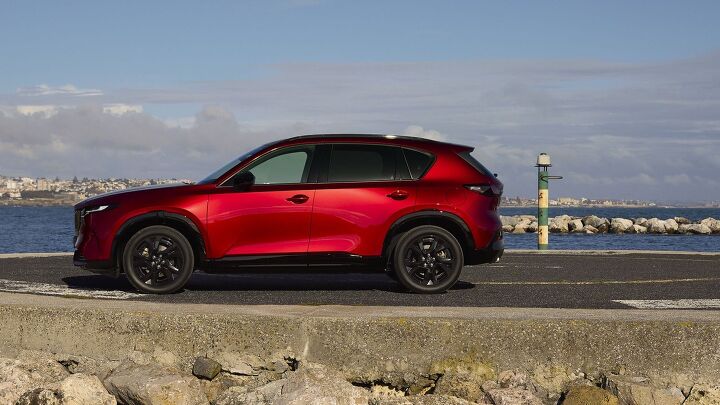
Compounding Mazda’s slide is the absence of the CX-5 from this year’s scoring. Consumer Reports does not assign predicted reliability ratings to the first model year of a complete redesign, and the updated 2026 CX-5 falls into that category. Without one of its most consistent performers contributing to the brand average, Mazda’s overall ranking took a huge hit.
Reputation alone doesn’t guarantee a trouble-free ownership experience. Even brands that dominate reliability charts can stumble with major redesigns or new powertrains. Consumer Reports has previously noted that plug-in hybrids as a class tend to experience more powertrain-related problems than traditional gasoline or standard hybrid vehicles, largely due to their added complexity.
Toyota’s rebound shows how quickly a brand can recover once early production issues are addressed. At the same time, the struggles of certain plug-in hybrids are a reminder that added hardware and software layers can introduce new variables.
This article was co-written using AI and was then heavily edited and optimized by our editorial team.
Become an AutoGuide insider. Get the latest from the automotive world first by subscribing to our newsletter here.

More by AutoGuide.com News Staff


Comments
Join the conversation
Yep....Mazda screwed up. However, when you ask MECHANICS, they will tell you that the CX-5, CX-30 and the CX-50 are not only the most reliable, they are also the easiest and least expensive to repair when something does go wrong.
My daughter’s 2023 Toyota Highlander’s gasoline version’s transmission failed after only 78,000 miles! Fortunately she purchased their platinum extended warranty and was covered. They said it was an internal transmission failure.