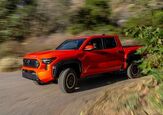


The Toyota RAV4 vs The Mitsubishi Outlander: Solving The PHEV Problem

We review and test drive the 2026 Toyota RAV4 Hybrid and RAV4 PHEV and 2026 Mitsubishi Outlander PHEV to find out which is the best plug-in hybrid SUV to buy.
If you are buying a 2026 model year PHEV, make sure to watch this review!
Toyota RAV4 Plug-In Hybrid vs. Mitsubishi Outlander PHEV: Which Plug-In SUV Should You Buy?
If you are shopping for a reliable, well-built hybrid SUV that offers strong value, the Toyota RAV4 is typically the default recommendation. It is a bestseller for good reason, but it suffers from one major flaw: it is extremely difficult to buy.
Because of intense demand and inventory shortages, buying a RAV4 Hybrid—and especially the plug-in hybrid (PHEV) variant—often requires placing a factory order and waiting anywhere from several months to over a year.
If you want a Japanese-made, plug-in hybrid SUV without the absurd wait times, what are your options? The Mitsubishi Outlander PHEV stands out as the primary, highly underrated underdog alternative.
1. Powertrain Options: Gas vs. PHEV
Before comparing the Outlander to the RAV4, it is important to address the two different versions of the Outlander:
- 1.5L Mild-Hybrid Gas Model (Skip): The conventional gas Outlander uses a small 1.5L turbocharged 4-cylinder engine paired with a 12V mild-hybrid generator and a Jatco CVT transmission. It is mechanically complex, underpowered, and not particularly fuel-efficient. It is best to skip this version entirely.
- 2.4L Plug-In Hybrid Model (Recommended): The Outlander PHEV uses a time-tested 2.4L naturally aspirated 4-cylinder engine paired with a dual-electric motor setup (one motor powering the front axle, one powering the rear).
How the Outlander PHEV Operates
The Outlander PHEV operates essentially as a range-extended electric vehicle. The gas engine mostly acts as an onboard generator to feed power to the battery and electric motors, meaning the wheels are predominantly driven by electricity. There is no traditional multi-speed transmission, resulting in an exceptionally smooth, quiet, EV-like driving experience.
2. Specs, Range, and Performance
While both vehicles offer impressive hybrid tech, the numbers lean heavily in favor of the Toyota on paper.
Power Output
- Toyota RAV4 PHEV: Generates 324 horsepower, offering rapid 0–60 mph acceleration (around 5.5 seconds).
- Mitsubishi Outlander PHEV: Generates 298 horsepower. It feels quick and responsive off the line due to instant electric motor torque, but it isn't as fast as the RAV4.
All-Electric Driving Range
- Toyota RAV4 PHEV: Delivers 50 to 55 miles (79 to 89 km) of purely electric driving on a full charge.
- Mitsubishi Outlander PHEV: Delivers roughly 45 miles (72 km) of electric driving per charge.
Towing Capacity
- Toyota RAV4 PHEV: Rated to tow up to 3,500 lbs.
- Mitsubishi Outlander PHEV: Restricted to a lower 1,500 lb towing capacity.
Gasoline Fuel Economy (Hybrid Mode)
- Toyota RAV4 PHEV: When the battery runs out, the gas engine operates as a conventional hybrid, returning an impressive 40 MPG (~6.0 L/100 km).
- Mitsubishi Outlander PHEV: Once the electric charge depletes, hybrid gas mode returns only 27 MPG (~8.6–9.0 L/100 km). To maximize cost savings in the Outlander, you must plug it in regularly to keep it operating on electric power as much as possible.
3. Ride Comfort and Driving Dynamics
While the RAV4 wins on raw efficiency and power, the Outlander PHEV dominates in driving refinement.
- Ride Quality & Cabin Quietness: The Outlander features superior sound insulation, a plush suspension, and seamless power delivery from its twin electric motors. It feels noticeably quieter, smoother, and more comfortable over bumps than the RAV4.
- All-Wheel Drive Performance: Mitsubishi's Super All-Wheel Control (S-AWC) system uses independent front and rear electric motors to actively vector torque, giving the Outlander exceptionally composed handling in slick winter conditions.
4. Interior Quality, Tech, and Practicality
The cabin experience is another area where the Mitsubishi punches well above its weight class.
Mitsubishi Outlander PHEV
- Interior Materials: Features premium soft-touch plastics, high-end upholstery options, tight fit-and-finish, and an upscale design that feels significantly more luxurious than the Toyota.
- Physical Controls: Includes standard physical knobs and hard buttons for climate control and volume adjustments.
- Passenger Seating: Comes equipped with a standard 5+2 seating layout (a small pop-up 3rd row). While the 3rd row is far too cramped for adults, it can handle small children in a pinch.
Toyota RAV4 PHEV
- Interior Materials: Functional and durable, but heavily reliant on hard plastics and utility-grade trim.
- Controls: Relies more heavily on touchscreen menus for vehicle adjustments.
- Passenger Seating: Strictly a two-row, 5-passenger crossover. Includes a physical spare tire under the cargo floor (which the Outlander lacks due to its rear battery components).
5. Reliability, Dealer Support, and Real-World Pricing
Long-Term Reliability
Both vehicles are built in Japan and feature solid mechanical track records. However, Toyota's 5th-generation hybrid system remains the gold standard for long-term durability and high resale value.
Dealer Network & Maintenance
Toyota's massive dealership footprint makes routine maintenance and parts sourcing effortless. Mitsubishi operates a much smaller dealer network, meaning replacement parts and specialized service can occasionally involve longer turnaround times.
Real-World Purchasing & Pricing
- MSRP Window: The Outlander PHEV carries a slightly higher sticker price ($46,000 to $56,000 USD / $52,000 to $65,000 CAD) compared to the RAV4 PHEV ($43,000 to $50,000 USD / $51,000 to $62,000 CAD).
- Actual Dealer Pricing: Because Toyota dealers have almost no inventory, buyers pay full MSRP with zero discounts or incentives. Conversely, Mitsubishi dealerships carry abundant inventory. Buyers can easily negotiate strong dealer discounts and combine them with government green-vehicle rebates—frequently saving $8,000 or more, making the Outlander the cheaper option out the door.
Final Verdict
Buy the Toyota RAV4 PHEV if: You are willing to wait months for delivery, want maximum gas-only fuel economy (40 MPG) once the battery dies, need a 3,500-lb towing capacity, or prioritize top-tier resale value.
Buy the Mitsubishi Outlander PHEV if: You need a vehicle immediately without dealer waitlists, want to negotiate thousands off MSRP, desire a significantly quieter and more luxurious interior, or prefer the ultra-smooth driving dynamics of an EV-style powertrain.
Become an AutoGuide insider. Get the latest from the automotive world first by subscribing to our newsletterhere.

Shari Prymak is the host of the Car Help Corner YouTube channel and the Executive Director of Car Help Canada (formally known as the Automobile Consumer Coalition). Car Help Canada is a non-profit organization that supports consumers when dealing with the automobile industry. Mr. Prymak holds Bachelor degrees (BSc and BEd) from the University of Toronto and York University respectively. Prymak’s experience as an automobile consultant has helped thousands of consumers with their automobile purchases and many aspects of automobile ownership. Mr. Prymak has also published a number of research reports on consumer protection and the automobile industry. He also lobbies the government on behalf of consumers and is a member of OMVIC's Consumer Advisory Committee, a delegate authority for the Ontario government. Prymak has hosted programs on consumer protection in the motor vehicle industry on social media, television and radio.


Comments
Join the conversation
Hey car help corner,
'intense demand and inventory shortages"
Welcome to Capitalism! What a perfect way to get generate profits.
Also:
Reason number 1 to look at Toyota,
'Toyota's 5th-generation hybrid system remains the gold standard for long-term durability"
Without that you are just asking for a "Yugo"
Reason 2
"combine them with government green-vehicle rebates"
how old is this AI generation? these rebates have been gone Since Sept '25
Reason 3.
"range-extended electric vehicle"
Since Physics will tell us this is a less efficient way of creating energy
why not just go full battery electric then and avoid complexity?
yes toyota is boring but they Invented the powertrain and class and have no plans to give it up anytime soon