


Should You Buy The 2026 Toyota RAV4?

Taking a quick look at the 2026 Toyota RAV4 Hybrid to find out if it is the best SUV to buy.
We test drive the new 2026 Toyota RAV4 Woodland, the 2026 Toyota RAV4 XSE, and the 2026 Toyota RAV4 Limited. If you're looking to buy a 2026 Toyota RAV4, make sure to watch this!
The AutoGuide Creators Series tells stories and amplifies creators from the car world, including family life, car buying advice, commuting tips and car culture.
Should You Buy the 2026 Toyota RAV4?
That’s what we’re going to find out.
Welcome to Car Help Corner. After spending time driving and testing the entire redesigned 2026 Toyota RAV4 lineup, I’ve come away with a pretty clear impression: Toyota has made meaningful improvements in all the right areas. In fact, this new RAV4 may end up being one of the very best compact SUVs you can buy.
There’s a lot to like here, but it isn’t perfect. So let’s go through the biggest highlights first, then cover the few areas where the new RAV4 still needs work.
The new RAV4 lineup
The first thing to know is that the 2026 RAV4 now comes in three main groups.
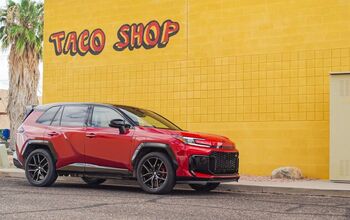
The core models include the LE, XLE, and Limited, and all of them are offered only as hybrids. Then there’s the more rugged RAV4 Woodland, which adds upgrades like extra ground clearance, a standard tow hitch, all-terrain tires with unique wheels, and a few visual changes for a more off-road-oriented look. Like the core trims, the Woodland is also hybrid-only.
Finally, there are the sport models: the SE, XSE, and GR Sport. These are available as either a hybrid or a plug-in hybrid.
That means the big headline is this: Toyota has dropped the conventional gas-only RAV4. The new model is now offered exclusively as a hybrid or plug-in hybrid.
That’s a bold move, and some buyers will definitely be disappointed that there’s no regular gasoline engine anymore. But Toyota’s reasoning makes sense. On the outgoing RAV4, the hybrid was the version most buyers actually wanted. It was more powerful, more fuel-efficient, quieter, smoother, and just as reliable as the regular gas model. So in that context, Toyota going all-hybrid isn’t that surprising.
And now that the hybrid system has been improved even further, the benefits are even more obvious.
1. Excellent fuel economy
Fuel economy is the main reason most people buy a hybrid in the first place, and thankfully the new RAV4 delivers.
Depending on trim, the 2026 RAV4 is capable of returning roughly 40 to 45 mpg, or about 5 to 6 L/100 km. The base LE is the most efficient version, while the Woodland is the least efficient because of its more aggressive all-terrain tires.
Even so, every version is impressively efficient for a compact SUV. This is the kind of fuel economy that makes a real difference in everyday ownership.
2. Stronger performance
It’s not just efficient, either. The new RAV4 is surprisingly powerful.
Toyota’s updated hybrid system now produces 236 horsepower, which is a healthy number for a vehicle in this class. There’s plenty of power for merging, passing, and getting up to highway speed. It feels responsive and appropriately strong without being overdone.
For most buyers, it’s exactly the right amount of performance.
3. Impressive towing capacity
That extra power also helps in another important area: towing.
Every trim except the base LE can now tow up to 3,500 pounds, which puts the RAV4 near the top of the class in this segment. The Woodland trim even includes a standard tow hitch, while the others can be equipped with one.
So not only is the new RAV4 efficient and decently quick, it’s also a practical option for buyers who need to tow a small trailer, boat, or other gear on a regular basis.
4. Proven reliability
Any time a company launches a redesigned model with updated technology, the obvious question is whether long-term reliability will suffer.
Fortunately, that shouldn’t be a major concern here.
Even though the RAV4 is new, the hybrid system it uses is really just an evolution of Toyota’s long-proven setup. It still relies on a naturally aspirated 2.5-liter four-cylinder engine, with no turbocharger, paired to electric motors and an eCVT planetary gearset transmission. There’s also a third electric motor powering the rear wheels, which provides standard all-wheel drive.
Toyota first introduced this latest fifth-generation hybrid system in the current Prius, then expanded it into the latest Camry, and now it’s in the RAV4. More broadly, Toyota has been refining hybrid technology for over two decades, and it remains one of the most durable and dependable systems on the market.
If you want an SUV that’s efficient, performs well, and has the potential to last 10 to 15 years without major repair headaches, the RAV4 is still one of the safest bets.
5. A much more refined driving experience
One area where the old RAV4 was really starting to lag behind was refinement. It was practical and dependable, but it wasn’t the quietest or smoothest SUV in the segment.
Toyota has clearly worked on that.
The updated hybrid system is noticeably quieter and smoother, but that’s only part of the story. The new RAV4 also benefits from a 10 percent stiffer body structure, along with other suspension upgrades that improve ride comfort and overall composure.
Toyota has also fitted larger glass areas, including a taller rear window for better visibility. Add everything up, and the result is a RAV4 that feels more comfortable, more polished, and more substantial on the road than before.
In fact, it now feels much closer to more expensive Toyota and Lexus products, including the Toyota Crown Signia and even something like the Lexus NX. It doesn’t fully cross into luxury territory, but it definitely moves in that direction.
6. Spacious interior
The 2026 RAV4 is not dramatically larger than before, and its overall dimensions haven’t changed much. But that’s not really a problem, because it was already one of the more practical SUVs in its class.
There’s still plenty of room in both rows, and adults should have no trouble getting comfortable in the back seat. Cargo space remains generous, and overall practicality continues to be one of the RAV4’s biggest strengths.
7. It still has a spare tire
This may sound like a small thing, but for many buyers it matters a lot: every trim of the new RAV4 comes with a compact spare tire.
That’s becoming increasingly rare, especially on hybrid vehicles, so it’s a welcome feature to see retained here.
8. Better technology and features
The new infotainment system is one of the interior’s biggest upgrades.
Depending on trim, the RAV4 now comes with either a 10.5-inch or 12.9-inch touchscreen, both running Toyota’s latest multimedia system. It’s quick, responsive, easy to understand, and laid out in a straightforward way.
There are some nice new touches too, including a built-in drive recorder/dash cam system.
Other available features include a very good camera setup with an optional 360-degree surround-view camera, a fully digital gauge cluster, heated and ventilated front seats, a regular or panoramic sunroof depending on trim, a head-up display, a digital rearview mirror, dual wireless charging pads, up to five USB-C ports, and the latest Toyota Safety Sense 4.0 suite.
Overall, the RAV4 is very well equipped, especially in upper trims.
9. Outstanding resale value
This isn’t unique to the redesign, but it’s still one of the RAV4’s strongest selling points.
Because the RAV4 has such a strong reputation for durability, efficiency, and long-term dependability, it has excellent resale value. After three or four years, they tend to lose far less value than many competitors. Even after 10 or 12 years, they’re still often worth a surprising amount of money.
And that matters.
Real value isn’t just about the upfront price. It’s about the total cost of ownership: fuel, maintenance, repairs, and what the vehicle is still worth when it’s time to sell. In all of those areas, the RAV4 is one of the strongest performers in the segment.
10. There’s still a plug-in hybrid option
Finally, Toyota continues to offer the RAV4 as a plug-in hybrid, and it remains one of the most compelling versions in the lineup.
It uses the same basic architecture as the regular hybrid, but adds a much more powerful front electric motor. Output rises from 236 horsepower to 320 horsepower, making it genuinely quick for a compact SUV.
At the same time, it retains essentially the same fuel economy when running as a hybrid, and thanks to its larger battery pack, it can travel up to around 50 miles or 80 kilometers on electric power alone.
If your daily driving fits within that range, the plug-in hybrid version could be especially appealing.
Where the new RAV4 still falls short
So far, so good. The redesigned RAV4 gets a lot right. But there are still a few issues worth mentioning.
Too few physical controls
The biggest complaint is Toyota’s decision to reduce the number of physical buttons and knobs.
To be fair, the new infotainment system is quite good, and Toyota didn’t eliminate everything. There’s still a row of buttons and a volume knob below the screen, and the climate controls remain fixed at the bottom of the display, so your main functions are never buried too deeply.
Still, it would have been better if Toyota had kept more traditional controls, especially since they chose to use physical buttons for things like drive modes next to the charger area—functions most drivers will rarely touch.
That space could have been better used.
The electronic shifter is unnecessary
On certain trims, instead of a conventional shifter, Toyota now uses an electronic gear selector.
Thankfully, this is limited to the Limited and XSE technology trims. Most versions still get a traditional mechanical shifter, which is great to see.
The electronic unit works fine, and it’s not one of those frustrating push-button setups. But it still feels like an unnecessary change. A regular shifter would have been simpler and just as effective.
The interior still isn’t premium
The RAV4’s interior is well equipped, and overall build quality appears strong. But if you were hoping for a more luxurious cabin, this still isn’t that.
And honestly, that’s okay. The RAV4 isn’t supposed to be a Lexus. It’s a practical compact SUV, and the more utilitarian feel suits its character.
Still, buyers stepping into upper trims may expect something a little more upscale than what’s offered here.
Supply will probably remain a problem
The last issue has less to do with the vehicle itself and more to do with buying one.
Like many Toyota models, the RAV4 is likely to continue suffering from limited supply, especially in Canada, where buyers often have to place an order and wait months for delivery.
Toyota is working to improve that. The company has opened a new hybrid battery plant in the United States, which should help support production, and the RAV4 will continue to be built in multiple locations, including the U.S., Ontario, and Japan. The plug-in hybrid version will come from Japan.
That should help, but demand is still likely to be very strong.
Pricing and arrival timing
At the time of this review, Toyota had not yet released final pricing.
That information should become available closer to production, which is expected to begin in December, with the first vehicles arriving at dealerships in January and February.
Still, I wouldn’t expect a dramatic price increase over the 2025 model. Toyota knows the RAV4 sits in one of the most competitive parts of the market, so keeping pricing relatively close to the outgoing model would make sense.
Final thoughts
Toyota has done a very good job with the 2026 RAV4.
The company improved the powertrain, fuel economy, refinement, towing capability, and technology without overcomplicating the vehicle or losing the core strengths that made the RAV4 so popular in the first place. It’s still practical, still efficient, still dependable, and now it’s noticeably more polished.
It’s not perfect. The reduction in physical controls is disappointing, the electronic shifter feels unnecessary, and the interior still isn’t especially premium. But those issues don’t outweigh the fact that this is a very well-executed redesign.
If Toyota can keep pricing reasonable and supply improves, the 2026 RAV4 should remain one of the easiest compact SUVs to recommend.
Would you consider buying the all-new RAV4?
Become an AutoGuide insider. Get the latest from the automotive world first by subscribing to our newsletter here.

Shari Prymak is the host of the Car Help Corner YouTube channel and the Executive Director of Car Help Canada (formally known as the Automobile Consumer Coalition). Car Help Canada is a non-profit organization that supports consumers when dealing with the automobile industry. Mr. Prymak holds Bachelor degrees (BSc and BEd) from the University of Toronto and York University respectively. Prymak’s experience as an automobile consultant has helped thousands of consumers with their automobile purchases and many aspects of automobile ownership. Mr. Prymak has also published a number of research reports on consumer protection and the automobile industry. He also lobbies the government on behalf of consumers and is a member of OMVIC's Consumer Advisory Committee, a delegate authority for the Ontario government. Prymak has hosted programs on consumer protection in the motor vehicle industry on social media, television and radio.






Comments
Join the conversation