

The Last R35 Nissan GT-R Ever Built Has Rolled To A New Home

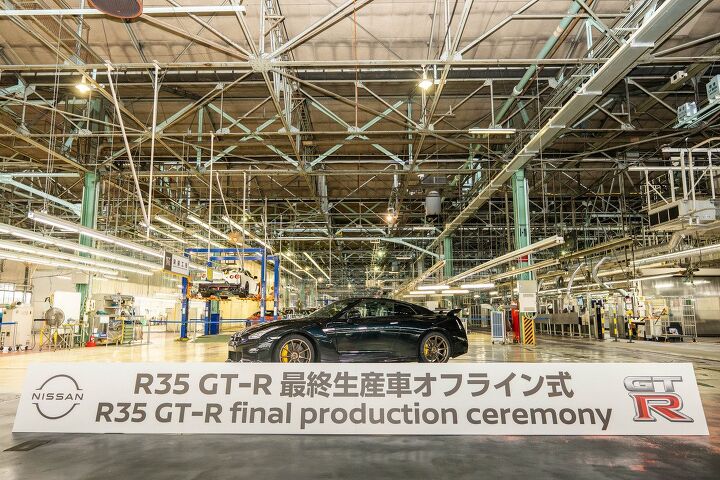
It feels like we've been talking about the R35 GT-R going out of production for years now—this week, Nissan finally built the very last one.
Key Points
- The final R35 Nissan GT-R has been built after an 18-year production run, ending with a T-Spec model finished in Midnight Purple.
- Over its lifespan, Nissan produced about 48,000 R35 GT-Rs, with hand-built engines assembled by master Takumi technicians and a legacy of racing success in Super GT and at the Nürburgring.
- Nissan says the GT-R name will return in the future, likely with electrification, leaving the Z as the brand’s current performance flagship.

Fittingly, the final GT-R is a T-Spec model painted in Midnight Purple, one of the GT-R's numerous heritage colors from the model's storied history. The car is destined for a customer in Japan rather than Nissan retaining it for its own collection.
Introduced in 2007, the R35 was in production for an extraordinary 18 years— far longer than any of its predecessors, like the R34, R33, and R32 GT-Rs. Over nearly two decades, Nissan built roughly 48,000 cars, about a third of which stayed in Japan.
Initially, the R35 was a technological wizard that offered supercar performance at a fraction of the price. As it aged into its teenage years, the GT-R's tech advantage ebbed as the world evolved—like an automotive Overton window—and the GT-R became less cutting-edge, yet still brutally effective at what it does best. Even in its later years, the 600-horsepower NISMO variant could embarrass some very exotic stuff on track days.

The GT-R was also a force in professional racing. In Japan’s Super GT championship, it claimed five GT500 class titles and three GT300 crowns, along with numerous GT3 wins and several driver's championships across the globe in numerous GT World Challenge championships.
Much of the car's aura came from the craftsmanship it hid under the hood—every R35's twin-turbo V6 was hand-built by a Takumi, master technicians who signed each engine after meticulous assembly and testing.
Contemporary critics often described the R35 as cold or overly digital—this was before the time of soul sucking software-defined vehicles—especially compared to the more analog R32 through R34 models, but the car carved out its own identity over time. It evolved from super stiff and track-focused to a more polished, yet imposing GT performance car.
Nissan has promised the GT-R badge will return, likely with some form of electrification, though the timing is uncertain—Nissan doesn't really have any money right now, haven't you heard? For now, the Nissan Z will carry the brand’s performance torch.
“We understand the expectations are high, the GT-R badge is not something that can be applied to just any vehicle; it is reserved for something truly special and the R35 set the bar high," said Ivan Espinosa, President and CEO of Nissan. "So, all I can ask is for your patience. While we don’t have a precise plan finalized today, the GT-R will evolve and reemerge in the future.”
Until next time, GT-R.
Become an AutoGuide insider. Get the latest from the automotive world first by subscribing to our newsletter here.

An experienced automotive storyteller and accomplished photographer known for engaging and insightful content. Michael also brings a wealth of technical knowledge—he was part of the Ford GT program at Multimatic, oversaw a fleet of Audi TCR race cars, ziptied Lamborghini Super Trofeo cars back together, went over the wall during the Rolex 24, and wrenched in the intense IndyCar paddock.
More by Michael Accardi


Comments
Join the conversation