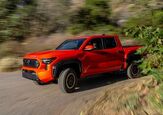


Hyundai Kona Trade in Value: Here's What You Should Get and Why

The Hyundai Kona is a standout player in the subcompact crossover segment, prized for its distinctive design, nimble handling, and flexible powertrain suite—ranging from sensible naturally aspirated four-cylinders to punchy turbos, the track-focused Kona N, and all-electric models.
In the trade-in environment, entry-level subcompact crossovers experience predictable initial lease-cycle depreciation. However, the Kona maintains strong equity retention thanks to Hyundai’s long warranty coverage, high standard tech content, and steady secondary-market demand for efficient daily commuters.

2nd Generation — Modern Geometric & Curved-Display Era (2024–2025)
The clean-sheet redesign. Significantly larger with enhanced rear legroom, featuring futuristic pixelated light bars, dual 12.3-inch panoramic glass displays, and shifted gear selectors. Powertrains include the 147-hp 2.0L Smartstream 4-cylinder (CVT) and the 190-hp 1.6L Turbo paired with a smooth 8-speed torque-converter automatic (replacing the previous dual-clutch transmission).
Year | Trim Group | Worse (Fair) | Average (Good) | Better (Excellent) |
|---|---|---|---|---|
2025 | SE / SEL (Core 2.0L FWD/AWD) | $18,100 | $19,500 | $21,100 |
N Line / N Line S (1.6T Sport Styling) | $21,200 | $22,800 | $24,600 | |
Limited (1.6T Turbo Flagship) | $23,400 | $25,100 | $26,000 | |
2024 | SE / SEL (Redesign Launch) | $15,200 | $16,800 | $18,400 |
N Line | $18,100 | $19,800 | $21,500 | |
Limited | $20,200 | $22,000 | $23,900 |

1st Generation — Facelift & Kona N Era (2022–2023)
The mid-cycle refresh phase. Updated with sleeker front fascia styling, a new 10.25-inch infotainment screen, and revised suspension tuning. Highlighted by the debut of the Kona N—a wild 276-hp 2.0T track-tuned crossover with launch control and an electronic dual-clutch transmission. Standard models utilized either the 147-hp 2.0L engine or the 195-hp 1.6L Turbo.
Year | Trim Group | Worse (Fair) | Average (Good) | Better (Excellent) |
|---|---|---|---|---|
2023 | SE / SEL (2.0L FWD/AWD) | $13,400 | $14,800 | $16,200 |
N Line / Limited (1.6T Turbo) | $16,100 | $17,700 | $19,300 | |
Kona N (276-hp Track Flagship) | $20,200 | $22,400 | $24,200 | |
2022 | SE / SEL | $11,500 | $12,900 | $14,300 |
N Line / Limited (Facelift Launch) | $14,100 | $15,600 | $17,100 | |
Kona N (Inaugural Launch Year) | $17,900 | $19,800 | $21,600 |
1st Generation — Original Launch Platform Era (2018–2021)
The inaugural platform built on Hyundai's B-SUV architecture. Defined by armor-like body cladding, split headlight styling, and multi-link rear suspension on AWD models. Trims ranged from base SE and SEL up to sportier 1.75-liter/1.6-liter turbos (Ultimate and Limited).
Year | Trim Group | Worse (Fair) | Average (Good) | Better (Excellent) |
|---|---|---|---|---|
2021 | SE / SEL / SEL Plus | $9,800 | $11,100 | $12,500 |
Night / Limited / Ultimate (1.6T Turbo) | $11,900 | $13,400 | $14,900 | |
2020 | SE / SEL / SEL Plus | $8,200 | $9,400 | $10,700 |
Limited / Ultimate | $10,100 | $11,500 | $12,900 | |
2019 | SE / SEL | $6,800 | $7,900 | $9,100 |
Limited / Ultimate | $8,500 | $9,800 | $11,100 | |
2018 | SE / SEL (Inaugural US Launch) | $5,500 | $6,500 | $7,600 |
Limited / Ultimate | $7,100 | $8,300 | $9,500 |
The Kona N Performance Asset and AWD Multipliers
Your exact mechanical build and trim package act as major anchors during trade negotiations:
- The Kona N Collector Equity (2022–2023): The limited-production Kona N (packing 276 hp, N Grin Shift overboost modes, variable exhaust, and electronic limited-slip differential) stands as a true hot-hatch unicorn. Because it was produced for only two model years before being discontinued, clean, unmolested Kona Ns command intense enthusiast demand, retaining a $4,000 to $6,000 equity cushion over standard Limited models.
- The All-Wheel Drive (AWD) Suspension Bonus: On 1st-generation standard models (2018–2023), opting for AWD added more than just all-weather traction—it upgraded the rear suspension from a basic torsion beam setup to a sophisticated multi-link independent rear. Dealers pay a steady $1,000 to $1,500 trade premium for AWD variants due to better ride dynamics and higher regional retail demand.
Navigating the 2024 Generation 2 Redesign Threshold
If your Kona sits near the 2023–2024 boundary, the 2024 model year redesign represents a major structural threshold for trade valuations:
- The Screen and Transmission Evolution: The move to the 2nd generation added nearly 6 inches of vehicle length and introduced dual 12.3-inch panoramic display screens. Crucially, 1.6T turbo models swapped out the old 7-speed dual-clutch transmission (which could feel clunky at low parking speeds) for a traditional, smooth 8-speed torque-converter automatic. 2024+ models enjoy insulated pre-owned liquidity as a result.
Market Tip: Cladding Care and Touchscreen Detail
Because the Kona features prominent exterior design elements and dense digital screen displays, appraisers conduct targeted inspections:
- Restore Plastic Body Armor: On 1st-generation models, the dark plastic cladding around the wheel arches and lower bumpers can fade or show scuffs. Applying a quality plastic trim restorer prior to the appraisal creates an immediate impression of diligent maintenance.
- Detail the Panoramic Screen: The large dual-screen glass panel on 2024+ models easily gathers fingerprints. Wiping down the display with an alcohol-free microfiber cloth ensures the appraiser enters a spotless digital workspace during their test drive.
AutoGuide’s Advice:
Whether you drive an efficient SE daily, a sporty N Line, or a high-performance Kona N, presenting a clean, chronologically organized folder of dealership service records directly on the passenger seat alters the appraiser's underwriting risk profile. Demonstrating consistent maintenance is your single best strategy to lock in a top-tier "Excellent" trade offer.

More by AutoGuide.com Staff


Comments
Join the conversation