

60 Percent Of Drivers Are Struggling With Headlight Glare

If you’ve felt like nighttime driving has gotten harsher on the eyes, you’re not alone.
A new study from AAA finds that roughly 60 percent of drivers say modern headlights create excessive glare, particularly from oncoming traffic. Despite the frustration, safety data suggests the issue may be more of a nuisance than an actual hazard.
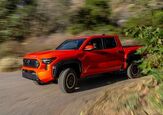
The change is tied to two major trends: lighting technology and vehicle size. Modern cars increasingly use LED and HID headlights, which are brighter and whiter than older halogen setups. At the same time, trucks and SUVs continue to dominate the market—and their higher ride height often places headlights directly at eye level for drivers in lower vehicles.
That combination can make nighttime driving uncomfortable, especially on undivided roads.

“Headlight glare has become a major source of frustration and concern for millions of drivers,” said Greg Brannon, AAA’s director of automotive engineering and research. “As vehicle lighting technology evolves, so must our understanding of glare and its impact.”
Oncoming Traffic Is the Main Culprit
According to AAA’s findings, 92 percent of drivers who experience glare point to oncoming headlights as the primary issue. Reflections in mirrors are also a factor, with about one-third of respondents saying they’re bothered by trailing vehicles.
Certain groups report more difficulty than others. Drivers who wear prescription glasses are more likely to notice glare, and women report higher sensitivity than men. Interestingly, pickup truck drivers—who sit higher off the ground—are less likely to complain, likely because they’re less exposed to direct beam alignment from other vehicles.
Frustrating, But Not More Dangerous
Despite the complaints, there’s little evidence that brighter headlights are leading to more crashes, the IIHS says poor visibility remains a far more significant safety concern. Data from the Insurance Institute for Highway Safety (IIHS) shows that glare is cited in just one to two out of every 1,000 nighttime accidents, a rate that hasn’t increased even as lighting has grown more intense. An imperfect metric if there ever was one.
“Although it can certainly be uncomfortable, headlight glare contributes to far fewer crashes than insufficient visibility,” said IIHS president David Harkey.
Of course, one must consider that the IIHS is a huge driver of increased headlight performance through their ratings system and research. In fact, the IIHS evaluation program is focused on encouraging headlight designs that reduce the risk of nighttime single-vehicle crashes.
Which is great when you're one of the people driving those cars, but not so great for the rest of us whose eyes are bearing the brunt of your increased ability to avoid a single vehicle crash at night.

A Trade-Off in Modern Lighting
There’s also a potential upside to brighter headlights. Improved forward visibility can help drivers spot hazards earlier, and advanced driver-assistance systems like automatic emergency braking may perform better with stronger illumination.
Still, that doesn’t solve the comfort issue for drivers facing oncoming traffic. There's also a question about the effects of glare on reducing forward visibility for those who are experiencing it.
What Comes Next?
As lighting technology continues to evolve, many experts point to adaptive beam systems as a long-term solution. These systems can automatically adjust headlight patterns in real time, illuminating the road ahead while reducing glare for other drivers.
Become an AutoGuide insider. Get the latest from the automotive world first by subscribing to our newsletter here.

More by AutoGuide.com News Staff







Comments
Join the conversation
Just as drivers had control of WHEN to use high-beams in the past,.. there should be additional light-controls with LED lights ,.. especially, in higher profile vehicles, to either CHANGE THE ANGLE down to a lower projection,.. or simply REDUCE the brightness for oncoming traffic,...or both? Originally high-beams were helpful on undivided-highways where there is not much traffic, outside of cities.. but these LED lights are used in high-population areas, and are a pain and nuisance for night-time oncoming-drivers!
They (along with other technical 'advances') seem aligned with a growing self-centered, self-comfort, and degraded moral-culture which seldom considers other people, and seems less-responsible to the society?
Don't forget to make sure your LED foglights are on all the time as well. It is important to look good and feel good when oncoming traffic is driving straight into a tree because they cannot see where they are going due to the blinding lights on the front of your truck/SUV.
What does it tell you when automakers actually switch off a headlight so you can tell that a turn signal is on? Either the headlight is already too bright, or (and what I assume will be coming in the future) make the turn signal 10x brighter so now you have a blinding flashing light on the car.