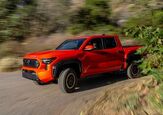


The Tesla Cybertruck is Officially Dead


One of the most hyped automotive products in history will now go down in the record books as a pretty disastrous flop.
Elon Musk confirmed on Friday that Tesla will begin winding down production of its radical stainless-steel pickup truck at Gigafactory Texas around mid-2027, marking an unceremonious conclusion to one of the most hyped, polarizing, and scrutinized passenger vehicles in modern automotive history.
In a short post published on X, Musk framed the decision as an operational necessity rather than a retreat:
"Tesla will be winding down production of the Cybertruck at Gigafactory Texas around the middle of next year to make room for increased Cybercab production."
While Musk pitched the phase-out as factory floor reallocation, industry analysts and registration data indicate that the pickup had simply run out of road. The Cybertruck’s impending exit closes a turbulent chapter defined by lofty promises, production nightmares, and cratering consumer demand.

The Reality Behind the Cut: 10% of Expectations
When Musk initially unveiled the angular, sci-fi pickup in November 2019, Tesla promised a seismic disruption of the lucrative American truck market. Musk claimed pre-orders had crossed one million reservations and set long-term production targets of at least 250,000 units per year.
The financial and operational reality never came close.
Tesla poured massive capital into specialized manufacturing lines, heavy cold-rolled stainless-steel stamping presses, and custom tooling at Gigafactory Texas, establishing an initial installed capacity of more than 125,000 trucks per year. Despite that enormous investment, production lines sat largely underutilized, operating at a meager 10 to 12 percent of the 250,000-unit annual volume the company originally promised.
The mismatch stemmed directly from a steep and sudden drop in consumer demand once Tesla finished clearing through its initial backlog of eager reservation holders. According to estimates from Cox Automotive, quarterly deliveries plummeted to just 3,500 to 4,300 units throughout 2026, bringing total cumulative global sales to around 70,000 vehicles—a tiny fraction of Tesla’s internal forecasts.
To make matters worse, vehicle registration figures revealed that genuine, organic retail interest was even thinner than the headline sales numbers suggested. By late 2025, approximately one out of every five new Cybertrucks registered in the United States had not been bought by the public at all, but rather purchased as internal fleet vehicles by Elon Musk’s other ventures, including SpaceX, The Boring Company, Neuralink, and xAI.
Several fundamental missteps doomed the pickup's mass-market viability.
First, Tesla failed to deliver on its original price and capability targets. While the truck was initially advertised with an accessible starting price under $40,000 and up to 500 miles of driving range, it arrived years behind schedule carrying an $80,000 to $100,000 price tag alongside real-world range that fell well short of early promises.
Beyond the inflated sticker price, the vehicle's polarizing design prioritized spectacle over everyday utility. Its bare stainless-steel exoskeleton, sharp geometric angles, and cumbersome proportions alienated traditional truck buyers looking for dependable, job-ready workhorses, ultimately earning the Cybertruck a reputation as a suburban novelty rather than a serious utility vehicle.
Finally, the truck ran into insurmountable regulatory hurdles abroad. Because of its rigid exterior panels, heavy curb weight, and resulting pedestrian safety concerns, Tesla found it virtually impossible to homologate the Cybertruck outside North America, permanently cutting the company off from major lucrative markets across Europe and Australasia.
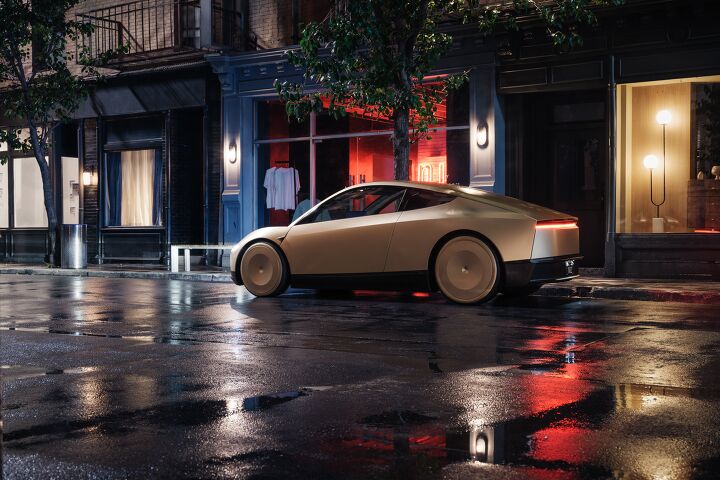
The Pivot: All Bets on the Cybercab
Retiring the Cybertruck is part of a broader, deliberate transformation within Tesla. The company has steadily phased out its legacy luxury lines—including the Model S and Model X earlier in 2026—to redirect capital, assembly space, and engineering bandwidth toward autonomy, artificial intelligence, and robotics.
The vehicle taking the Cybertruck’s place on the Austin floor is the Cybercab, Tesla’s purpose-built robotaxi:
- Built for Autonomy: Designed without a steering wheel or pedals, the two-seater Cybercab relies purely on Tesla’s vision-based Full Self-Driving (FSD) architecture and inductive wireless charging.
- Low-Cost Target: Tesla is engineering the vehicle to sell for under $30,000, leveraging an "unboxed" manufacturing strategy aimed at radically lowering per-unit production costs.
- Extreme Scale Ambitions: Musk has publicly targeted millions of robotaxis annually, envisioning dedicated ride-hailing networks operating alongside personally owned Cybercabs that generate passive revenue for their owners.
A High-Stakes Gamble
By pulling the plug on the Cybertruck, Tesla is cutting its losses on an expensive mechanical detour. The truck served as a masterclass in headline generation and manufacturing bravado, but its failure to convert cultural buzz into recurring revenue made its line at Giga Texas an unsustainable luxury.
However, replacing a struggling retail truck with an autonomous robotaxi trades one massive risk for another. The Cybercab’s future hinges entirely on Tesla solving unsupervised Full Self-Driving and securing regulatory clearance across federal and state transit authorities.
Tesla has abandoned the traditional pickup truck market to wager its manufacturing core on driverless mobility—a transition where the margin for error is non-existent.
With AutoGuide from its launch, Colum previously acted as Editor-in-Chief of Modified Luxury & Exotics magazine where he became a certifiable car snob driving supercars like the Koenigsegg CCX and racing down the autobahn in anything over 500 hp. He has won numerous automotive journalism awards including the Best Video Journalism Award in 2014 and 2015 from the Automotive Journalists Association of Canada (AJAC). Colum founded Geared Content Studios, VerticalScope's in-house branded content division and works to find ways to integrate brands organically into content.
More by Colum Wood


Comments
Join the conversation