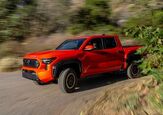


2027 Subaru Outback vs Subaru Trailseeker: Which One Should You Buy?

We review and test drive the 2027 Subaru Trailseeker and 2027 Subaru Outback XT to find out which is the best SUV to buy.
Which is the most reliable and best Subaru SUV to buy? If you are buying a 2027 Subaru Trailseeker or 2027 Subaru Outback, make sure to watch this review below:
Choosing between the Subaru Outback and the all-electric Subaru Trailseeker comes down to what you prioritize in a daily driver. While the Outback remains a benchmark for gas-powered family crossovers, the Trailseeker offers a zero-emissions alternative built on a shared platform co-developed with Toyota (which sells its twin as the bZ Woodland).
After testing both back-to-back, here is how they stack up across passenger room, performance, towing capability, interior technology, and overall value.
1. Exterior Dimensions, Interior Space, and Practicality
Both models occupy a similar footprint as midsize crossover crossovers, delivering cavernous legroom for front and rear passengers. However, key structural differences alter their utility:
- Subaru Outback: Features a taller roofline with extra interior headroom and an upright seating position. Under the cargo floor, the Outback includes a physical compact spare tire—a critical feature for off-highway road trips.
- Subaru Trailseeker: Offers a slightly lower, wagon-like roof profile. The rear cargo area provides deep storage space, but like many EVs, it replaces the physical spare tire with an tire inflator kit.
2. Powertrain Options, Acceleration, and Performance
The contrast in driving feel comes down to conventional combustion versus instant electric torque.
- Subaru Trailseeker (Dual-Motor AWD): Comes standard with a dual-electric motor setup generating a combined 375 horsepower. Sprinting from 0 to 60 mph in roughly 4 to 5 seconds, acceleration is immediate, whisper-quiet, and buttery smooth.
- Subaru Outback Base (2.5L 4-Cylinder): Outputs 180 horsepower. It offers adequate power for routine commuting, but feels sluggish under heavy passenger or cargo loads.
- Subaru Outback XT (2.4L Turbocharged 4-Cylinder): Delivers 260 horsepower. It provides a substantial power upgrade over the base engine, offering confident highway passing power without the complexity of an electric powertrain.
3. Ride Comfort, Towing, and Driving Range
- Ride Quality: While the Trailseeker is quiet and composed, the Outback features a significantly softer, more compliant suspension setup that glides over pitted pavement better than almost any competitor in its price bracket.
- EV Driving Range & Fast Charging: The Trailseeker delivers up to 280 miles (440 km) of electric range on a full charge. Equipped with a Tesla-style NACS charging port, it can access the Supercharger network for highway fast-charging.
- Towing Realities: Both the Trailseeker and the Outback XT are rated to tow up to 3,500 lbs. However, towing heavy loads with any electric vehicle significantly reduces battery range, making the gas-powered Outback XT the more practical choice for long-distance trailering.
4. Interior Controls and User Interface
The cabin layouts reflect two distinct technology suites:
- Subaru Trailseeker: Employs Toyota-sourced infotainment technology displayed on a large 14-inch touchscreen. It relies heavily on digital submenus rather than physical buttons, resulting in a steeper learning curve. The driver gauge cluster is mounted high on the dashboard above a squarish steering wheel, which can take time to adjust to. It also trades a traditional glove box for open storage and features a fixed panoramic glass roof with a power shade.
- Subaru Outback: Features a traditional control setup with tactile physical knobs and hard buttons for climate functions and audio adjustments. The infotainment system is responsive, intuitive, and lacks the ergonomic quirks found in the Trailseeker.
5. Pricing, Operating Costs, and Resale Value
- Subaru Outback: Starts around $37,000 USD ($43,000 CAD) for the base 2.5L model, climbing into the lower-to-mid $40,000s for Turbocharged XT trims. Annual fuel costs run between $2,000 and $2,500 under average driving conditions.
- Subaru Trailseeker: Starts around $42,000 USD ($53,000 CAD). In select markets, federal and regional EV incentives help close the price gap against an Outback XT. Annual home-charging costs average between $400 and $800, providing long-term fuel savings.
Resale & Reliability Note: Both models are manufactured in Japan with strong build quality. However, conventional gas crossovers like the Outback retain their resale value much better over 5-to-10-year ownership periods compared to electric crossovers, which experience steeper early depreciation curves.
Final Verdict
- Buy the Subaru Trailseeker if: You want standard 375-hp dual-motor all-wheel drive, zero tailpipe emissions, home-charging savings, and rapid EV acceleration.
- Buy the Subaru Outback if: You want maximum ride comfort, a physical spare tire, a traditional interior layout with physical climate knobs, long-distance towing convenience, and superior long-term resale value.
Become an AutoGuide insider. Get the latest from the automotive world first by subscribing to our newsletterhere.

Shari Prymak is the host of the Car Help Corner YouTube channel and the Executive Director of Car Help Canada (formally known as the Automobile Consumer Coalition). Car Help Canada is a non-profit organization that supports consumers when dealing with the automobile industry. Mr. Prymak holds Bachelor degrees (BSc and BEd) from the University of Toronto and York University respectively. Prymak’s experience as an automobile consultant has helped thousands of consumers with their automobile purchases and many aspects of automobile ownership. Mr. Prymak has also published a number of research reports on consumer protection and the automobile industry. He also lobbies the government on behalf of consumers and is a member of OMVIC's Consumer Advisory Committee, a delegate authority for the Ontario government. Prymak has hosted programs on consumer protection in the motor vehicle industry on social media, television and radio.


Comments
Join the conversation
Fully electric off road is as stupid as it gets. Somebody needs to make strap on spare batteries that can take you as far as a 5 gallon jerry can does. Guaranteed nobody takes a Trailseeker off road. They should call it the Chargerseeker.
Just bring back the normally aspirated flat 6.