

2026 Mitsubishi Outlander PHEV First Drive Review: Steady Improvements


VANCOUVER, B.C.—You wouldn’t expect a small brand like Mitsubishi to take any sort of sales chart crown, but the Outlander PHEV has done just that for three years straight.
Up in this (gorgeous) neck of the woods, the 2026 Mitsubishi Outlander PHEV is tasked with maintaining the title of best-selling plug-in hybrid in the country. The plug-in flagship of the diamond-trio brand has held that title since this generation debuted for 2023; this year, it arrives with a slew of choice upgrades including more power, more range, and more creature comforts. The result is a three-row—okay, two-point-five—SUV that offers a swanky, calming driving experience the rest of the mainstream class still struggles to match.
2026 Mitsubishi Outlander PHEV Quick Take
The 2026 Mitsubishi Outlander PHEV sees improvements across nearly all fronts, making the best-selling plug-in hybrid SUV an even better option for those wanting a smooth, powerful, and efficient family hauler. Its two biggest hurdles remain the comically tiny third row and, when fully loaded, a big sticker price—even if it does represent a good value.
What’s New for 2026:

The ‘26 Outlander PHEV takes the best approach to a mid-cycle facelift: small revisions across multiple fronts for an update worth more than the sum of its parts. Many of the styling, material, and feature improvements we already saw on the gas-powered Outlander, which was updated for 2025 (and gains a unique mild-hybrid 1.5-liter engine for this model year). This includes a revised cabin, larger infotainment screen, and the Dynamic Sound Yamaha audio systems, amongst other goodies.
More pertinent are the improvements under the skin, starting with a larger, 22.7-kilowatt-hour battery pack. That’s a 13-percent improvement, while maintaining the same physical dimensions. This isn’t a simple capacity bump, either: Mitsubishi switched from pouch-style to prismatic cell types, improving internal resistance as well as battery output. Not only does this bump up electric-only range to 45 miles (72 kilometers)—a useful 7 mi (11 km) improvement—but total system horsepower is now 297.
Exterior Style:

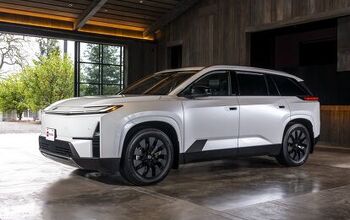
At a quick glance, there isn’t much to tell the new model apart from the pre-facelift. The Outlander still has that squinty visage and chrome C-clamp trim separating the grille from the outboard lighting elements. Look it right between the eyes and you’ll see a smoothed-over grille, while the chin has been cleaned up with a tidier design. The flanks retain the clean, chiseled looks of before, while the only discernible change out back is a switch to smoked taillights. Two new wheel designs, sized 18 and 20 inches, share a similar six-spoke theme. Moonstone Gray joins the exterior paint lineup as well, a cool blue hue that matches the typical Vancouver weather.
To these eyes, the Outlander has aged into its looks: what originally seemed busy and shouty has mellowed into a distinct and premium shape. The changes aren’t purely aesthetic, either: an improved drag coefficient ekes out some of that additional range.
2026 Mitsubishi Outlander PHEV: All the Details

Powertrain and Fuel Economy:

Mitsubishi takes a different approach to plug-in hybrids than most other brands. Instead of acting like a regular hybrid only with much more range, in most situations the Outlander PHEV prioritizes electric motoring, only waking up the (unchanged) 2.4-liter four-cylinder when necessary.
Even through mountain passes and under near-constant rain, the Outlander rarely sounded the trumpet of its gas engine. The added power allows the electric motors to take care of most situations on their own, and at a decent clip too. This is a chunky SUV (4,916 pounds / 2,230 kilograms), yet the Outlander is assertive even on the highway. When the gas engine does join the party, it does so with the good grace to not make a scene, quietly and smoothly meshing with the action. Mitsubishi doesn’t give exact figures, only saying the PHEV is now 16-percent quicker than before, but I have zero reason to doubt that.

As before, there are PHEV-specific drive modes to tailor the experience to your liking, including an almost-one-pedal function; you’ll still need to use the brake pedal to come to a complete stop. Drivers can also choose to prioritize battery charging (which naturally keeps the ICE running more often) or holding at the current battery state of charge (SoC).
With a slightly smaller gas tank, the Outlander PHEV still improves its total driving range to 690 km (429 mi). Its combined efficiency rating is 3.2 liters-equivalent per 100 km, when operating as a regular hybrid it scores 8.6 L/100 km (27 mpg) in city, highway, and combined. Charging on a 240-volt setup can completely refill the battery in 6.5 hours; fast-charging via rare CHAdeMO setups can do the 10-to-80 re-up in 29 minutes.
Handling and Drivability:

While every Outlander PHEV comes with Mitsubishi’s S-AWC all-wheel drive system, don’t come in expecting a reborn Lancer Evo. The focus here is secure, confident handling, with a tight 2.6 turns lock-to-lock keeping the Outlander feeling as agile as it needs to be. The steering is light, consistent, and predictable, building trust nice and early.
Like Toyota hybrids, there is no physical connection between the front and rear axle in the Outlander PHEV. The rear electric motor exclusively acts on the back; the engine and motor take care of the front.
Across a rain-slicked drive route the Outlander never set a foot wrong. There are multiple drive modes: tarmac, snow, gravel and mud are self-explanatory, as are normal and eco. The PHEV also includes an S-power option that locks the hybrid system in parallel mode for maximum power. We didn’t get an opportunity to truly test all the other modes; save that for our usual extended drives on home turf.
Ride Quality and Comfort:

Along with the slight aerodynamic tweaks, the ‘26 Outlander also rolls on quieter tires. Mitsubishi has upped the sound deadening material as well, including a new cover for the generator. The result is a vehicle that glides along the road, even when said road is getting pelted with rain. With the focus on EV driving as often as possible, this keeps the Outlander PHEV feeling luxury-car quiet in most situations.
Front-seat comfort is good, with excellent thigh and shoulder support. Yes, this tester has the massage function, though it’s honestly a little basic, feeling more like constant reinflation than an actual massage. The middle row remains useful for adults but the headliner with the big pano roof can limit headroom for taller folks.
As before, the third row is more of a bragging right or emergency-use situation than anything else. Legroom is essentially non-existent with the second-row set to an average position. It’s good for little ones and that’s all.
Interior Style and Quality:

With the new, brown color scheme found in this tester, the Outlander PHEV easily earns the title of fanciest Mitsubishi. I’m not trying to damn it with faint praise, either: this is a genuinely nice place to spend time, as the front seats are plenty comfortable and offer a good range of motion. The dashboard design is as before: simple, horizontal, lots of soft-touch material. The quilting along the door panel is a nice touch that elevates the Outlander beyond many of its mainstream competitors.
Rejoice, fans of cold drinks and cooled buns: Mitsubishi has listened, redesigning the cupholders to be larger while also very subtly resting at two different angles so that the tops clear. Meanwhile ventilated seats are now available on higher trims; and they work pretty well, too.
Tech and Safety:

That larger 12.3-inch central screen is now standard across the board. It’s the usual story here: bigger and better to look at, it nonetheless makes some usability sacrifices by chopping down the number of physical controls surrounding it. With a permanent menu to the left at all times, its easy enough to use and relatively speedy in its reactions. The native navigation is not pretty, mind you. While wireless Apple CarPlay has been a part of this Outlander generation since launch, wireless Android Auto joins the party for the facelift. SiriusXM 360L functionality is also available along with an extended service subscription.
The digital instrument cluster and (available) head-up display offer similar stories: crisp and easy to read, scoring high for usability. The former also includes plenty of selectable information including a breakdown of exactly how the hybrid system is currently operating.
That Yamaha sound system is excellent, with crisp highs and plenty of bass. A soundtrack of mid-aughts Canadian post-hardcore is an appropriate stress-test, and the 12-speaker setup delivers.
Mitsubishi's safety assist lineup is generally robust, including as standard all the typical acronyms found on modern vehicles. There are just two oddities: buyers need to pony up to the GT to get lane keep assist and stop-and-go functionality for the adaptive cruise control.
Value Dollars and Sense:

With a starting price of $52,123 CAD including destination, the 2026 Outlander PHEV should qualify for the recently re-introduced EV tax incentive in Canada. Moving up through the trims, the SE ($54,723 CAD) adds useful upgrades like three-zone climate control and a heating steering wheel; the LE ($56,923 CAD) could be the sweet spot with faux suede-and-leather seating, the multi-view camera system, and two-tone 18-inch alloys. Up next at $59,723 CAD is the SEL trim, adding leather seating, front-row ventilated seats plus second-row heated perches, and the larger wheels. For $62,723 CAD buyers will get the GT, adding the Yamaha sound system, HUD, and adaptive cruise control with stop-and-go functionality. The GT Premium adds semi-aniline leather and front massage functions for an additional $1,100. At the top sits a Noir Edition, which does the typical black-out stuff.
American pricing is unavailable at this time.
Final Thoughts: 2026 Mitsubishi Outlander PHEV First Drive

The 2026 Mitsubishi Outlander PHEV checks a whole lot of boxes. It’s an appropriate flagship for a small brand like Mitsu: not only is it a rolling tech showcase, but that tech actively addresses a lot of the needs of the modern car buyer. Yes, the third row is still tiny, and $64,000 is a big number when attached to a Mitsubishi, but the Outlander PHEV is a refined, comfortable and efficient family vehicle—now it’s just a little bit better in every way.
Become an AutoGuide insider. Get the latest from the automotive world first by subscribing to our newsletter here.
Pros | Cons |
|---|---|
More power | Third row is still clown car-sized |
More range | Top trims become pricey |
Classy cabin, excellent audio | Native nav is dated |
Specifications | |
|---|---|
Engine/Motor: | 2.4L I4 w/ 2 electric motors |
Output: | 297 hp |
Drivetrain: | e-AWD |
Transmission: | 1AT |
US Fuel Economy (MPGe): | 74 |
CAN Fuel Economy (Le/100 km): | 3.2 |
Starting Price (USD): | N/A |
As-Tested Price (USD): | N/A |
Starting Price (CAD): | $52,123 (inc. dest.) |
As-Tested Price (CAD): | $63,823 (inc. dest.) |
Kyle began his automotive obsession before he even started school, courtesy of a remote control Porsche and various LEGO sets. He later studied advertising and graphic design at Humber College, which led him to writing about cars (both real and digital). He is now a proud member of the Automobile Journalists Association of Canada (AJAC), where he was the Journalist of the Year runner-up for 2021.
More by Kyle Patrick






Comments
Join the conversation