- Acura
- Alfa Romeo
- Aston Martin
- Audi
- Bentley
- BMW
- Buick
- Cadillac
- Chevrolet
- Chrysler
- Dodge
- Ferrari
- Fiat
- Ford
- Genesis
- GMC
- Honda
- Hyundai
- Infiniti
- Jaguar
- Jeep
- Kia
- Lamborghini
- Land Rover
- Lexus
- Lincoln
- Lotus
- Lucid
- Maserati
- Maybach
- Mazda
- McLaren
- Mercedes-Benz
- MINI
- Mitsubishi
- Nissan
- Pagani
- Porsche
- Ram
- Rivian
- Rolls-Royce
- SMART
- Subaru
- Tesla
- Toyota
- Volkswagen
- Volvo
The 10 Best Japanese SUVs of All Time
Japanese brands got into the rugged off-road business before they ever cornered the economy-car market, starting with genuinely tough machines built for the dirt and nothing else.
As those bruisers softened into the crossovers and family haulers we know now, a long line of well-respected models followed. Some of them became cult classics, the kind of trucks enthusiasts still hunt down, swap stories about, and refuse to sell. This list leans on heritage, driver appeal, and off-road credibility rather than spec-sheet math, so expect a few icons alongside the sales champions. Here are the ten that matter most.
10. Mitsubishi Pajero Evolution
The Pajero Evolution, introduced in 1997, starts the list on a hardcore note. It's the antithesis of the soft-roader, a reminder that before these brands learned to build crossovers that coddle, they built machines engineered to conquer. Few vehicles better capture the hardcore off-road spirit the Pajero line was built around.

9. Honda CR-V
If the RAV4 opened the door, the CR-V walked through it and set up permanent residence. It isn't here for cult cachet; it's here because it became the quiet workhorse that defined the compact crossover for an entire generation of buyers. The reputation rests on the unglamorous virtues: it lasts, it resists depreciation, and it keeps its occupants safe. There's nothing flashy about it, and that's exactly why it has sold in the numbers it has. Every modern family crossover is chasing what the CR-V figured out first.

8. Suzuki Jimny
The fourth-generation Jimny, introduced in 2018, is proof that an honest off-roader can also be a fashion statement. It became a sought-after urban accessory in London the same year it launched, despite road manners we'll charitably call poor. What redeems it entirely is its off-road ability, which is genuinely strong for something this small. The Jimny is the rare modern SUV that stays true to the rugged, dirt-first ethos the early Japanese 4x4s were built around, and buyers love it precisely for refusing to compromise.

7. Subaru Forester STI
Here's where the list turns sideways in the best way. Introduced in 2004, the Forester STI took an estate-shaped family wagon and bolted rally-car mechanical components underneath it. The result is one of the most quietly subversive vehicles Japan has produced: SUV-adjacent practicality on the outside, Subaru's rally pedigree where it counts. It's the sort of machine that makes you re-read the spec sheet to be sure you understood it correctly.

6. Subaru BRAT
Call it a pickup and a BRAT purist will correct you fast, because those two rear-facing seats bolted into the bed officially made it a passenger car. That was the whole trick: conceived in the late 1970s to cash in on America's compact-truck craze, the BRAT (short for Bi-drive Recreational All-terrain Transporter) dodged steep import taxes on foreign trucks by claiming carpool duty for the folks riding in back. No way that flies under today's safety rules, but it was perfectly legal then, and its affordable price and bulletproof mechanicals made it one of Subaru's biggest hits of the decade. Today it's pure quirky-classic gold.

5. Isuzu Trooper
The Trooper is the one that got away. Isuzu built it as a funky, square-edged compact off-roader starting in 1981, a go-anywhere alternative to the land yachts of the day, and it rode the 4x4 boom with a cavernous cabin and genuine mountain-goat ability. Its weirdest claim to fame is badge engineering taken to an extreme: thanks to Isuzu's ties with General Motors and an odd deal with Honda, the second-generation Trooper wore 13 different names across 10 brands, from the Acura SLX to the Holden Jackaroo. Isuzu left the U.S. passenger market years ago, which only makes a clean Trooper more of an enthusiast prize.

4. Toyota 4Runner
The 4Runner started life in 1984 as little more than a Hilux pickup with a fiberglass shell bolted over the bed, which tells you everything about where its priorities sit. Sold as the Hilux Surf in Japan until 2009, it grew into a body-on-frame cult hero that enthusiasts prize precisely because Toyota never softened it into a crossover. The durability is the stuff of legend: one iSeeCars study found nearly 4 percent of 4Runners on the road had clocked more than 200,000 miles. Few SUVs inspire the kind of loyalty that keeps owners refusing to trade them in.

3. Nissan Patrol
The Patrol is the one your Land Cruiser-loving friends don't like to talk about, and it has been fighting that exact fight since 1951, which makes it Nissan's longest-running series of models. It was the first vehicle to climb Japan's Mount Fuji, an 8,200-foot slog, and in 1962, it became the first motorized vehicle to cross Australia's brutal Simpson Desert, charting a path through more than 1,100 sand dunes. In the Middle East, where dune-bashing is a genuine motorsport, the Patrol is the default weapon of choice. North America mostly knows it as the Armada underneath, but the real thing is a go-anywhere legend.

2. Toyota RAV4
The RAV4 is where the whole segment begins. Introduced in 1994, it pioneered the soft-roader idea: SUV proportions paired with road manners that didn't punish you, yet without the body-on-frame penalties of a proper 4x4. We'd argue it is the true originator of the crossover category, predating the Nissan Qashqai by a comfortable margin, and crucially it kept genuine off-road capability rather than just the look of it. Everything on this list that wears a car-based platform owes the RAV4 a debt.

1. Toyota Land Cruiser
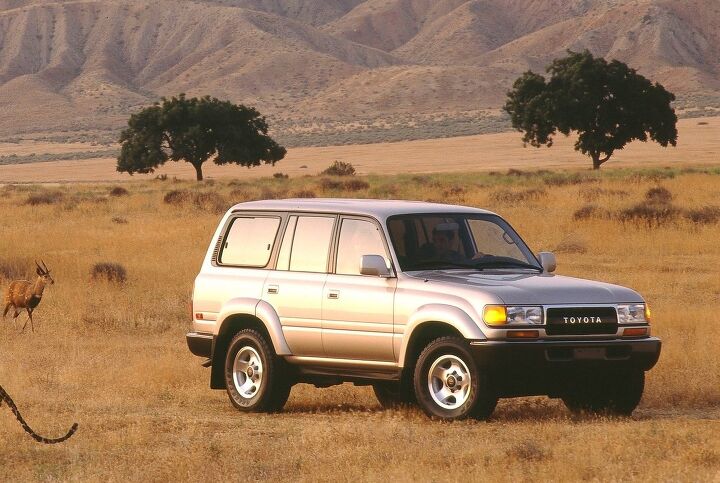
Start at the top, because nothing else on this list carries the weight the Land Cruiser does. It was the full-size, body-on-frame benchmark that every rival, foreign and domestic, measured itself against, and it earned that status by simply refusing to quit in places most vehicles never reach. Decades of overlanders, aid workers, and desert runners have trusted the thing with their lives, and iSeeCars still rates it the longest-lasting Japanese large SUV you can buy. The nameplate carries the weight it does because it has spent a lifetime earning it.